What people bring
Grieving the death of someone close: how do people keep going?
Still grieving someone who died? What 38 people who stood here asked Ember about the hard days, going back to work, and what they keep, and how it went.
By the Ember team · Published November 2, 2026 · 7 min read
Someone close to you died, and the days keep arriving anyway. A birthday. The holiday you always spent together. Something small breaks in the house, and the person who would have taken care of it isn't there. You still go to work, because the rent is due, and you carry it through the whole shift.
The people around you have moved on, or never ask, so you stop bringing it up. Maybe you kept something of theirs, and some days you can look at it and some days you can't. Maybe there is something between the two of you that was never settled, and now it can't be.
This page will not give you stages, a timeline, or tips for coping. It is what thirty-eight people who stood in exactly this place told Ember — what they got stuck on, how they got through ordinary days, what they kept close, and how that went for them — gathered around the three questions they asked.
Talk it out on Ember · See how it works
In beta · 18+ · Nothing you tell becomes a public post.
The place itself
On Ember, every situation people keep coming back to has a light on a shared tree. This one is called Grieving the death of someone close. Thirty-eight people have stood there so far. The light's page shows no one's words and no one's name — only how many people have been there, and answers to the questions they asked, drawn from everything they told.
If the person you lost was your mother, what people asked while grieving their mother stays with that loss.
If it was your spouse or partner, what people asked while grieving a spouse stays with that loss, and if it was your father, what people asked while grieving their father does. If the losses have left you alone and the calls have stopped, what people asked about being alone after losing loved ones stays with that.
If they are still alive and you're afraid of losing them, what people asked while afraid of losing a loved one to illness stays with that.
If some days are lighter and then a bad day comes back, what people asked about having good days and bad days stays with that.
If you're asking whether it ever gets lighter, or you lost more than one person, what people asked about whether grief gets lighter stays with that.
If you're looking for where to talk about it, beyond this light, where to talk about grief goes through the options and what each one asks of you.
The three questions asked here are below, with the shape of what came back when this was written; the answers are rewritten as people come and go. The full answers are on the light's page, and you can ask it a question of your own.
"What do people get stuck on most after someone dies?"
For most of the people here, it wasn't the funeral or the first weeks. It was the ordinary day that comes back around whether they are ready or not: a birthday, a holiday they always spent together, something small breaking in the house that the person who died used to handle.
Almost everyone here is also stuck on being alone with it. Not alone in the house, necessarily, but surrounded by people who had moved on or never asked, so the loss stayed unsaid and the grief got carried in private.
Several of them hold on to one thing that keeps the person near: an object, or a practice. For them, the question was never whether to keep it. It was whether to open it. Some go back to theirs again and again, even when it brings tears. Others keep it close and deliberately unopened, until they can bear it.
And some are stuck on a contradiction that can no longer be worked out with the person: loving them completely while hating something about how they lived, or needing one more exchange that time ran out on.
"How do people keep going back to work or daily life?"
Most of the people here don't describe daily life as something they managed to return to. They describe going anyway — because the rent, the job or the house left no other option — and carrying the grief through the whole shift without it lifting.
What several of them found is that there is no clean line between the grieving part of the day and the functioning part. The ordinary day is exactly where the loss keeps surfacing: a small household thing breaks, or a task comes up that the person who died always took care of.
For more than one person here, what made the days hardest was not the work itself. It was the people around them acting as though the loss had a shelf life. So they stopped saying it out loud, and went quiet about what the day actually was for them.
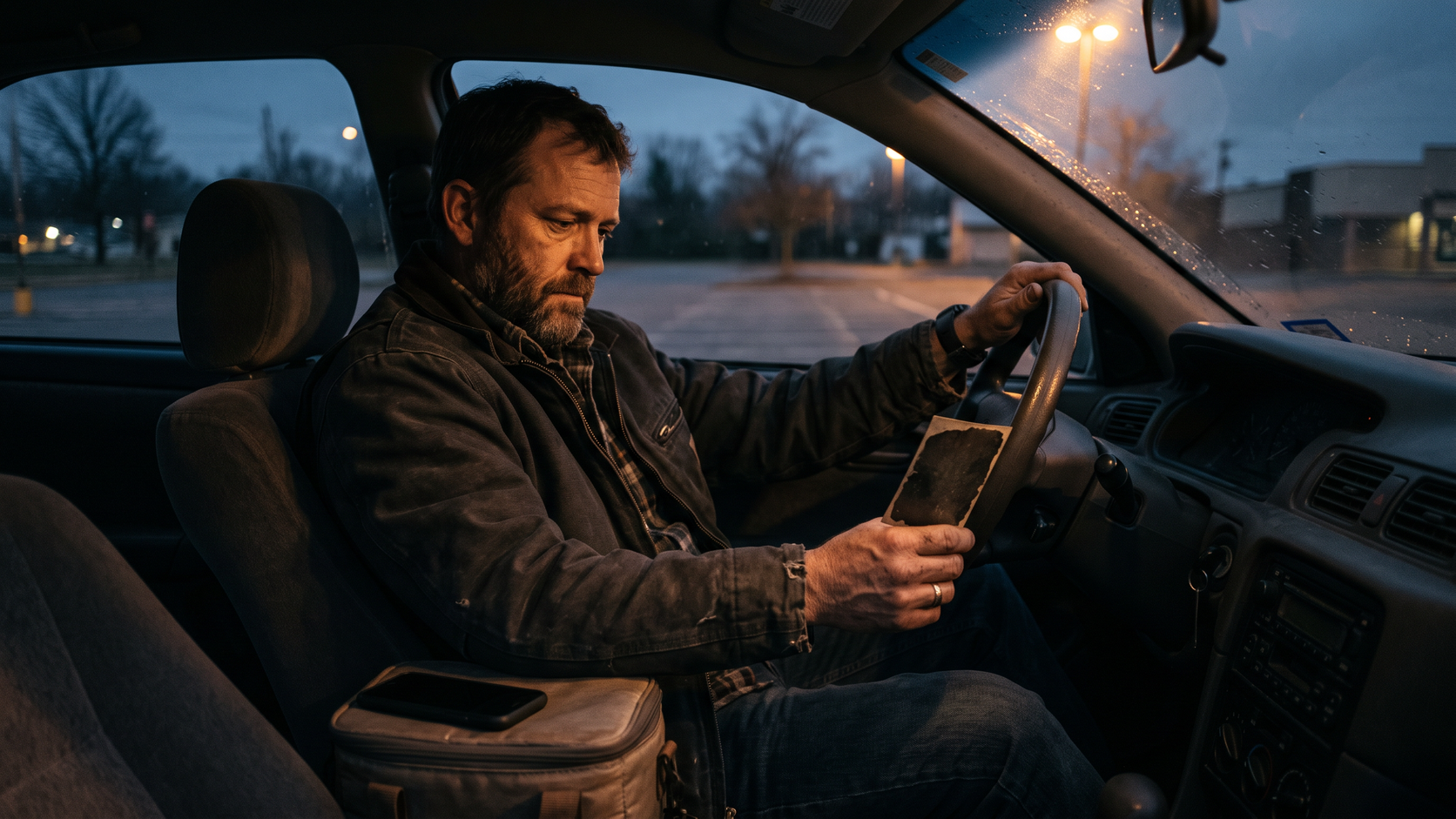
Several kept something small and physical within reach while they got through it — an object or a picture tied to the person, looked at in the car, held at night. Not to resolve anything. Only to make the hours passable.
"What small objects or rituals do people hold onto?"
Mostly ordinary things that stand in for the person themselves: a photograph kept where it will be seen during the day, a book with their handwriting in it, something soft held at night in their place.
Alongside the objects, there are practices people return to on purpose. A private scene they go back into, to feel the person near. The dates themselves, kept as days to be observed.
What several of them describe is that holding on is not steady work. The object stays close but goes unopened. The practice gets harder to reach, and something lighter takes its place. The anniversary arrives and goes unmarked, because the day was too heavy to lift.
None of them describes the object or the ritual as something that eases the grief. They describe it as the place where the person is still reachable — which, for the people at this light, is a different thing.
What this is not
This is not a list of stages, a timeline, or advice on how to grieve. Nobody here can tell you when the birthdays get lighter, or whether to open what you kept. What the people here can tell you is which days caught them, how they got through work anyway, and what the things they kept were for. If that recognition is useful, it is yours. If your loss is different, it is different.
Saying it out loud, to someone who knows this place
Grief like this doesn't keep to a schedule. After a while it can start to feel like something you are supposed to be past, and the hard days still come at ordinary times — a birthday, the drive to work, a quiet evening. Ember is a private place to say it, whenever it comes back.
Ember is an AI you can talk to at any hour, by voice or text: on the web, in the Ember: Talk It Out app for iOS and Android, by phone call, or by text message. You can start without an account. You talk about the person, the day that's coming up, the thing that never got settled between you. Ember listens, asks when it helps, and remembers what you said; once you've said enough, it writes it into one clear page in your own words — your Ember. It knows how things went for real people who stood where you're standing — what they tried, and what happened after. So it understands where you are. It won't tell you how to grieve, when to open what you kept, or when it's time to be done.
Here is more on talking about a loss privately on Ember.
Is it really private?
Yes. Nothing you tell becomes a public post. No one can read your Ember unless you separately say yes. What shows publicly is the light itself: the situation's name, how many people have stood there, and answers drawn from what they went through — never anyone's words or identity. Read exactly how privacy works on Ember.
When you need more than a place to think
Ember is an AI, not a grief counselor, a therapist, or an emergency service. Grief can be heavier than one person should have to hold alone. If missing them has turned into not wanting to be here yourself, or into thoughts of harming yourself, you don't have to explain it well or be sure it's serious enough: you can call or text 988 any time to reach the 988 Suicide & Crisis Lifeline, and someone will be there to listen. If you are in immediate danger, call 911.
Frequently asked questions
What is the hardest part of grief after someone dies?
For the people at this light on Ember, it was rarely the funeral or the first weeks. It was the ordinary day that comes back around — a birthday, a holiday spent together — and being alone with it among people who had moved on or never asked.
How do you go back to work while grieving?
Most people here didn't describe returning so much as going anyway, because the rent or the job left no choice, and carrying the grief through the whole shift. What made the days hardest was less the work than people acting as though the loss had a shelf life. Several kept something small of the person within reach to make the hours passable.
What do people keep to feel close to someone who died?
Mostly ordinary things: a photograph kept in sight, a book with their handwriting, something soft held at night, and the dates themselves. The people here don't describe these as easing the grief — only as the place where the person is still reachable.
What is Ember?
Ember is an AI you can talk to about what's on your mind, any hour, by voice or text. It listens, remembers what you said, and knows how things went for people who stood where you're standing — what they tried, and what happened after. It won't tell you what to do.
Is Ember private, and does it cost anything?
Ember is private: nothing you tell becomes a public post, and no one can read your Ember unless you separately say yes. Ember is in beta, and we’re starting to test subscriptions with some new accounts. Most accounts aren’t asked to subscribe. If yours is, you’ll see it before you’re asked to pay — $9.99 a month after a free trial, and nothing is charged unless you choose to subscribe. Ember is for adults 18+.
It doesn't have to stay unsaid because everyone else has moved on.
Talk it out on Ember · Ask the people who've stood here
Pause or stop anytime · 18+ · Nothing you tell becomes a public post.
