What people bring
Grieving the loss of a spouse: the nights and the empty house
Grieving a spouse or long-term partner? What 15 people who stood here asked — the nights, the paperwork, the unsaid — and how it went for them.
By the Ember team · Published November 4, 2026 · 7 min read
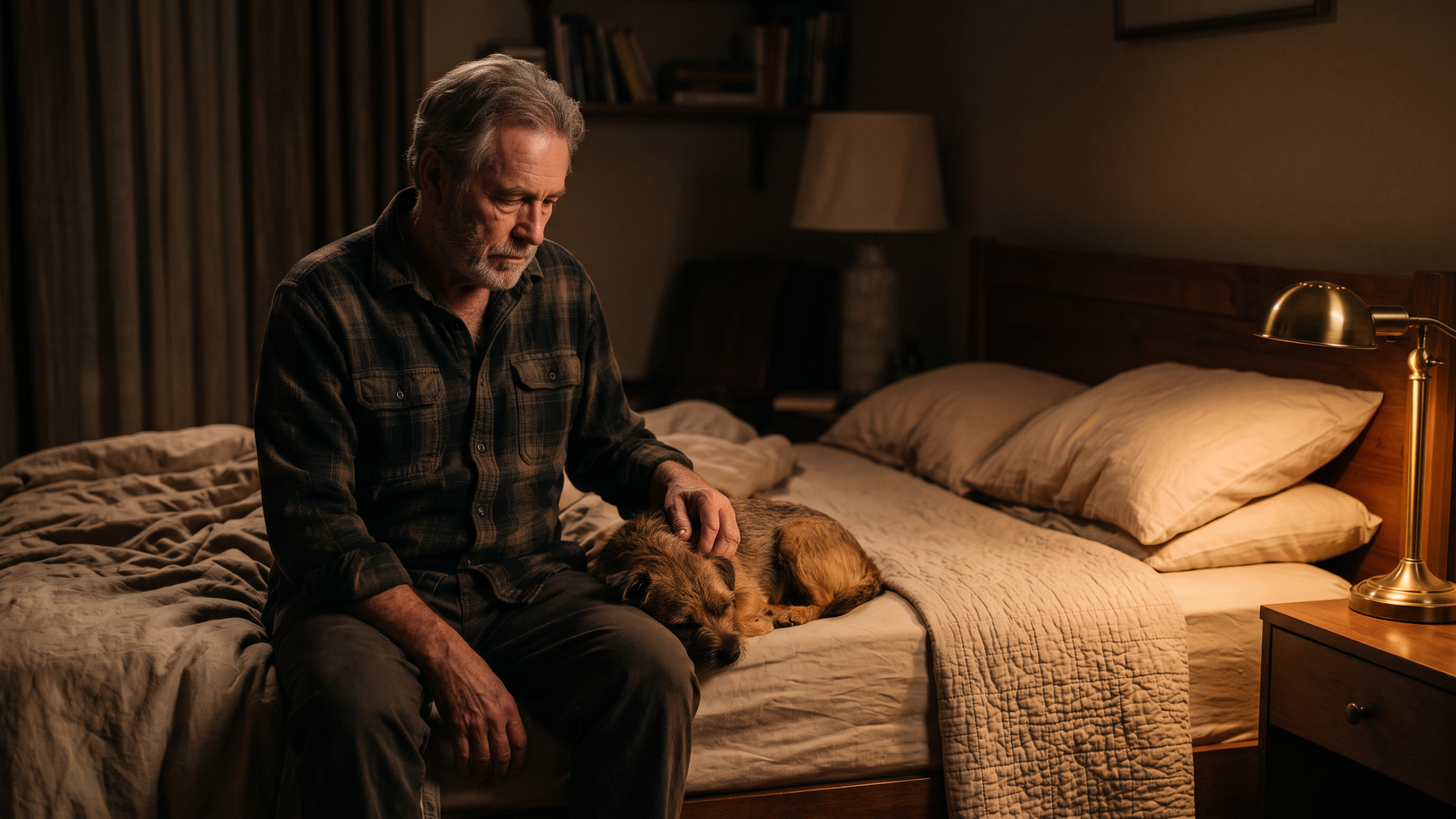
Your husband, your wife, the person you shared a life and a home with has died, and the house is still arranged for two. The bed is empty at night. Their chair is still their chair. What you miss most isn't the big things. It's someone on the couch with the television on, and reaching across in the dark to find them there.
And the rest keeps arriving on top of it: letters about money you didn't know was owed, forms you have to understand before you're ready to read them. Somewhere under all of it is the thing you never got to say, because the last ordinary hour together turned out to be the last one.
This page will not give you stages, a timeline, or a checklist for after a death. It is what fifteen people who stood in exactly this place told Ember — how they got through the nights, how they handled what kept arriving in the mail, and what they did with what was never said — gathered around the three questions they asked.
Talk it out on Ember · See how it works
Free while in beta · 18+ · Nothing you tell becomes a public post.
The place itself
On Ember, every situation people keep coming back to has a light on a shared tree. This one is called Grieving the death of a long-term partner. Fifteen people have stood there so far. The light's page shows no one's words and no one's name — only how many people have been there, and answers to the questions they asked, drawn from everything they told.
If the person you lost was someone else close to you, what people asked while grieving someone close stays with that wider loss — the birthdays, going back to work, the things people kept.
The three questions asked here are below, with the shape of what came back. The full answers are on the light's page, and you can ask it a question of your own.
"How do people get through the nights and the empty house?"
Nobody here says the house has stopped feeling wrong. The person isn't on the couch. The bed is empty at night. Their chair is still their chair. Several of them say night is the hardest time.
What they miss most is not the big things. It is the ordinary, physical presence of the person: someone lying on the couch watching television, reaching across in the dark and finding them there, being touched, kissed and held.
The ways through the night are small and physical too. A dog, or two, in the bed. Staying in this room and this hour, instead of going back to the morning it happened. Letting the routine that used to be for two keep going for one.
For a few of them, the loss came twice. A second partner died after a first, or the shared home was lost to the partner's family, so the grief had to be carried into a new place. They don't describe getting used to it. Only continuing.
None of them offers a lesson, and a couple say so outright. They only know that they miss the person and the comfort of being close to someone — and that the missing is what is left of a shared life.
"How do I deal with the money and the paperwork on top of this?"
Two of the people here carried money and paperwork alongside the grief, and neither found a way to handle it well. They handled it by absorbing whatever arrived next, because stopping wasn't available to them.
What they describe is obligations showing up faster than they could understand them, some they hadn't known existed, and things closing in rather than settling down.
One thing did move for them: going outward and asking. Sometimes that meant chasing every program and resource they could find. Sometimes it simply meant continuing to look into what was owed, rather than letting the letters pile up unopened.
Neither of them reached a point where it was resolved. Months later, they were still finding out what they didn't yet know. So nobody here can tell you this part ends on a schedule.
"How do I live with what was left unsaid?"
Several people here are living with words that never got said. None of them found a way to finish the conversation later.
What they had in common was that the ending came without warning. The last ordinary hour together turned out to be the last hour, and there was no moment set aside for saying anything.
They didn't resolve it. What they did was keep going while it kept coming back — back at work, making a home somewhere else — and the unsaid thing stayed alongside the rest of the grief instead of being cleared out of the way.
And for part of what went unsaid, learning it afterward didn't close anything either. Finding out what someone had felt arrived as something to be glad of and to grieve at the same time, because there was no one left to answer it.
What this is not
This is not a guide to being widowed, a checklist for the estate, or a timeline for when the nights get easier. Nobody here can tell you when the house stops feeling wrong — none of them said it had. What they can tell you is what they missed most, what got them through the dark, how the paperwork went, and what they did with what was never said. If that recognition is useful, it is yours. If your loss is different, it is different.
Saying it out loud, to someone who knows this place
There is a particular loneliness in this one. The person you would have told about a hard day is the person who died. The house has gone quiet, the nights are long, and the letters keep coming whether you are ready or not. And the worst hours come late, when there isn't always someone to talk to. Ember is a private place to say it anyway.
Ember is an AI you can talk to at any hour, by voice or text: on the web, in the Ember: Talk It Out app for iOS and Android, by phone call, or by text message. You can start without an account. You talk about them, the night ahead, the letter you haven't opened, the thing you never got to say. Ember listens, asks when it helps, and remembers what you said; once you've said enough, it writes it into one clear page in your own words — your Ember. It knows how things went for real people who stood where you're standing — what they tried, and what happened after. So it understands where you are. It won't tell you how to grieve, what to do with the house, or when it's time to be done.
Is it really private?
Yes. Nothing you tell becomes a public post. No one can read your Ember unless you separately say yes. What shows publicly is the light itself: the situation's name, how many people have stood there, and answers drawn from what they went through — never anyone's words or identity. Read exactly how privacy works on Ember.
When you need more than a place to think
Ember is an AI, not a grief counselor, a therapist, or an emergency service. Losing the person you shared a life with can be heavier than one person should have to hold alone. If missing them has turned into not wanting to be here yourself, or into thoughts of harming yourself, you don't have to explain it well or be sure it's serious enough: you can call or text 988 any time to reach the 988 Suicide & Crisis Lifeline, and someone will be there to listen. If you are in immediate danger, call 911.
Frequently asked questions
How do people get through the nights after a spouse dies?
For the people at this light on Ember, night was the hardest time, and the ways through it were small and physical: a dog in the bed, staying in this room and this hour rather than going back to the morning it happened, keeping up the routine that used to be for two. None of them describes getting used to it — only continuing.
How do people handle the money and paperwork after a partner dies?
Mostly by absorbing whatever arrived next, because stopping wasn't possible. What moved things for them was going outward and asking — looking into every program and resource they could find, or looking into what was owed instead of leaving the letters unopened. Months later they were still finding out what they didn't know.
How do people live with what they never got to say?
None of the people here found a way to finish the conversation. For each of them the ending came without warning, so the last ordinary hour was the last. They kept going with it — back at work, or in a new home — and the unsaid thing stayed alongside the grief rather than being cleared away.
What is Ember?
Ember is an AI you can talk to about what's on your mind, any hour, by voice or text. It listens, remembers what you said, and knows how things went for people who stood where you're standing — what they tried, and what happened after. It won't tell you what to do.
Is Ember private, and is it free?
Ember is private: nothing you tell becomes a public post, and no one can read your Ember unless you separately say yes. Ember is free while in beta, for adults 18+.
It doesn't have to stay unsaid just because the person you'd have told is gone.
Talk it out on Ember · Ask the people who've stood here
Pause or stop anytime · 18+ · Nothing you tell becomes a public post.
