What people bring
Estranged from your adult child, and never told why
Your grown son or daughter won't talk to you and won't say why. What 18 people who stood here asked Ember, and how it went for them.
By the Ember team · Published October 23, 2026 · 7 min read
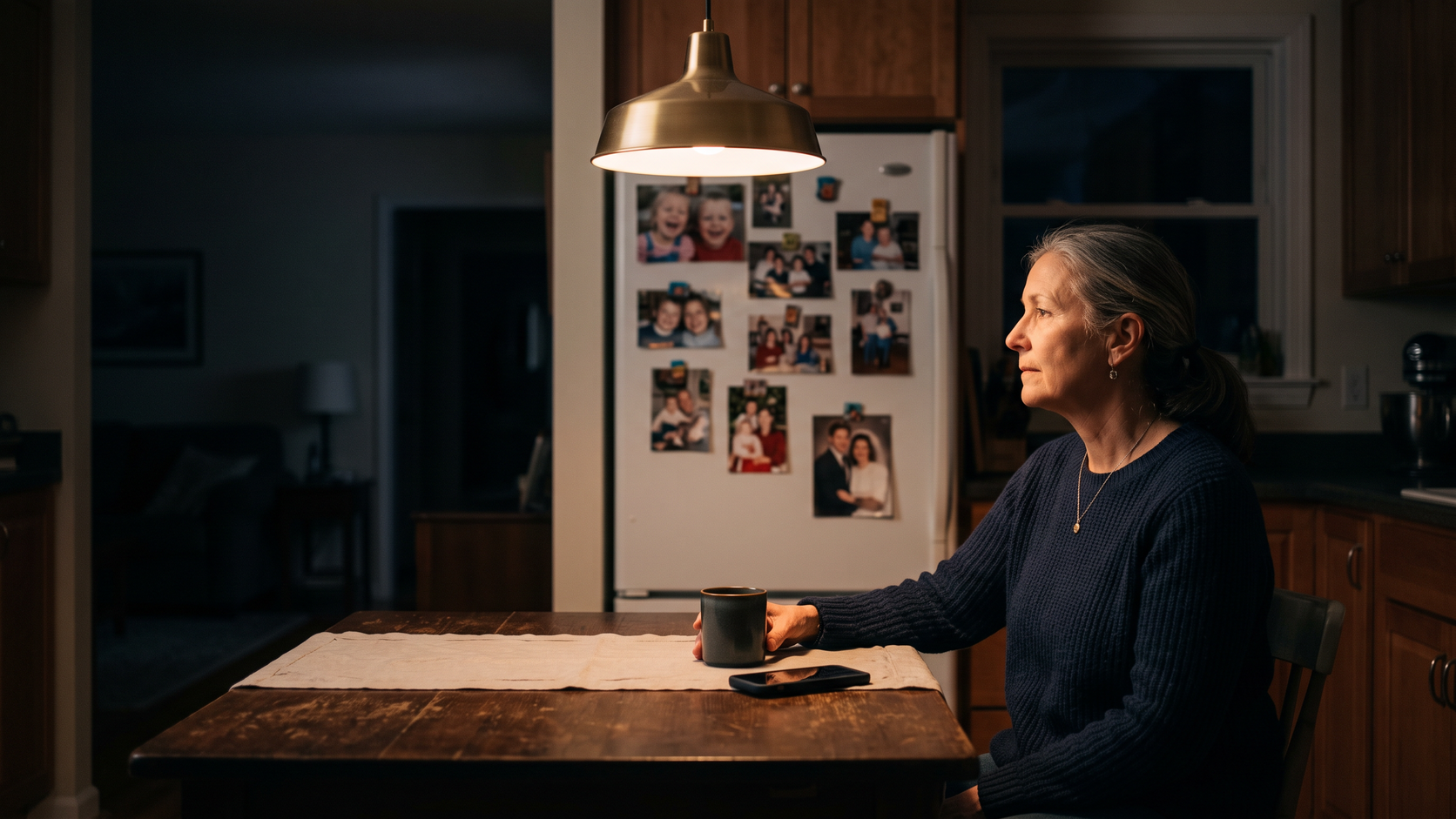
Your son or daughter used to call. Now the calls ring out, the texts sit on read, and the replies that do come are a word or two long. Maybe there was a fight you can point to. Maybe there wasn't. Maybe you've heard, secondhand, that you did something — and nobody will tell you what.
So you go over it again. Old messages, old holidays, the last real conversation. Whether to send one more text, or stop. Whether their partner has something to do with it. Whether the child you raised has come to see you as a bad person. It's in your nights now, and in your body, and it is lonely in a way that's hard to explain even to the person you live with.
This page is not a list of reasons adult children pull away, or a script for what to send next. It is what eighteen people who stood in exactly this place told Ember — what they tried, what the not-knowing did to them, and how it went for them after — gathered around the three questions they asked.
Talk it through on Ember · See how it works
In beta · 18+ · Nothing you say is posted.
The place itself
On Ember, every situation people keep coming back to has a light on a shared tree. This one is called Being estranged from an adult child. Eighteen people have stood there so far. The light's page shows no one's words and no one's name — only how many people have been there, and answers to the questions they asked, drawn from everything they told.
If the distance has reached your grandchildren too, Being estranged from a grandchild is a light of its own. If it's their parent keeping you from them, what grandparents asked about being kept from their grandchildren stays with that.
If you're the one reaching toward family members who keep pulling away, what people asked about feeling unwanted by family stays with that.
If your adult child is struggling with drugs, what parents asked about an adult child’s addiction stays with that.
If you're looking for where to talk about it, where to talk about an estranged adult child goes through the options, including groups for estranged parents.
The three questions asked here are below, with the shape of what came back when this was written; the answers are rewritten as people come and go. The full answers are on the light's page, and you can ask it a question of your own.
"What have people tried to reconnect, and did it help?"
The people here who tried to reconnect asked to go to counseling together, sent messages of love, or reached out after a long silence.
For some, what came back was more silence, or no reply at all. Others found that, in time, the distance brought peace, or small, tentative signs of warmth.
The people here who found a different kind of footing moved from trying to restore what was lost to accepting the relationship they actually have with their adult child.
"How do people keep asking without pushing their child further away?"
The people here who kept reaching mostly kept it small. A wave. A text. A question about the grandchildren. An invitation into something the two of them used to share. Things that asked for no reckoning.
The bigger asks went differently. The messages that named the hurt, or proposed sitting down together to sort it all out, were the ones that met refusal or resentment. And nobody here got an explanation by asking for one.
What they were left with instead was a long stretch of not knowing what they were accused of. Several carried that for a year or more, while the small reaching went on, and went unanswered.
Nobody here has reported that a particular way of asking brought their child back. So this light can't tell you which wording is safe. What it can tell you is that, for the people who stood here, asking for the reason never produced one.
"How does not knowing the reason affect people over time?"
The people here who don't know why they were shut out are left to carry the weight of the silence alone.
For some, not knowing the cause means they have no way to attempt a repair. For others, it turns into constant waiting, or into questioning their own character.
The people here who found a way forward did it by accepting the relationship they actually have, rather than grieving the one they once had.
If carrying it alone is the part you recognise, how to deal with loneliness is about exactly that.
What this is not
This is not a verdict on you or on your child, and it is not advice. Nobody here can tell you why your son or daughter went quiet, or whether they will come back. What the people who stood here can tell you is what they tried, what the asking did and didn't do, and what the not-knowing did to them over time. If that recognition is useful, it is yours. If your situation is different, it is different.
Saying it out loud, to someone who knows this place
There is a particular loneliness in this one: it is hard to tell friends without it becoming a verdict on you or on your child, and the one person you most want to talk it over with is the one who isn't answering. Ember is a private place to say it.
You talk, by voice or text, about your child, what happened, and what you still don't know. You can do it on the web, in the Ember: Talk It Out app, by phone call, or by text message, and you can start without an account. Ember listens, asks when it helps, and keeps what you said as one page in your own words — your Ember. It has heard from many people who stood in this same place, and many of them kept telling it what came after. So it knows how this tends to go for people. It won't tell you whether to send the next message, or whether to stop.
Here is more on talking about your grown children privately on Ember.
Is it really private?
Yes. Nothing you tell becomes a public post. No one can read your Ember unless you separately say yes. What shows publicly is the light itself: the situation's name, how many people have stood there, and answers drawn from what several of them share — never anyone's words. Read exactly how privacy works on Ember.
When you need more than a place to think
Ember is an AI, not a therapist and not an emergency service. If the grief has become something heavier — if losing your child has started to feel hopeless, or you are thinking about hurting yourself — the 988 Suicide & Crisis Lifeline is there any time: call or text 988. If you are in immediate danger, call 911.
Frequently asked questions
Why won't my adult child talk to me?
The people at this light on Ember who don't know why they were shut out carry the weight of the silence alone. Several went a year or more not knowing what they were accused of. For some, not knowing meant they had no way to attempt a repair; for others, it meant constant waiting, or questioning their own character.
What can I do to reconnect with my estranged adult child?
People here asked to go to counseling together, sent messages of love, or reached out after a long silence. For some, what came back was more silence, or no reply; others found that, in time, the distance brought peace, or small, tentative signs of warmth. The ones who found a different kind of footing moved from trying to restore what was lost to accepting the relationship they actually have.
How do I keep reaching out without pushing my adult child further away?
The people here who kept reaching did it in small ways — a wave, a text, a question about the grandchildren, an invitation into something once shared. The bigger asks, the ones that named the hurt or proposed sitting down to sort it out, met refusal or resentment. No one here has reported a way of asking that brought their child back.
What is Ember?
Ember is an AI you talk to about a real situation in your life, by voice or text. It keeps what you said as one private page in your words, and it knows how things went for people who stood where you're standing — what they tried, and what happened after.
Is Ember private, and does it cost anything?
Ember is private: nothing you tell becomes a public post, and no one can read your Ember unless you separately say yes. Ember is in beta, and we’re starting to test subscriptions with some new accounts. Most accounts aren’t asked to subscribe. If yours is, you’ll see it up front — $9.99 a month after a free trial, and nothing is charged unless you choose to subscribe. Ember is for adults 18+.
You don't need to know the reason before you're allowed to talk about it.
Talk it through on Ember · Ask the people who've stood here
Pause or stop anytime · 18+ · Nothing is posted.
