What people bring
Living alone and lonely, but more at peace: is it good for me?
Living alone, lonely at times, and still more at peace than around people? What 5 people who stood here asked on Ember, and how it has gone for them.
By the Ember team · Published November 16, 2026 · 7 min read
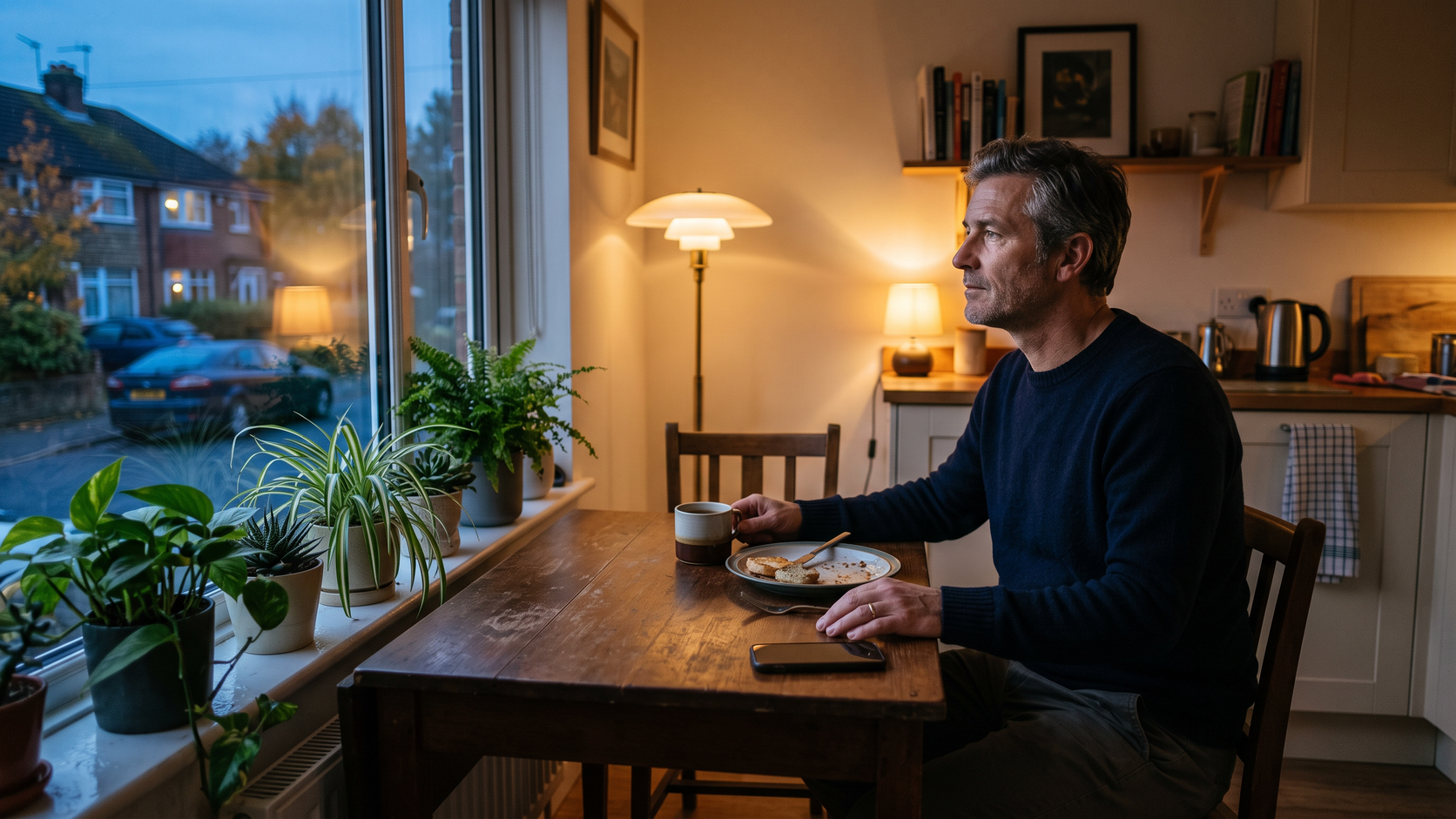
You live alone, and you get lonely. And still, living alone feels more peaceful than being around people: the quiet, not having to accommodate anyone, none of the effort that keeping up friendships takes. There's also no one to share the day with.
Both are true at once, and some days it's hard to say which one you're feeling. Maybe you've wondered whether being alone is good for you, or whether the quiet has become a way to hide.
This page won't tell you whether living alone is good for you, or give you tips for being happy alone. It is what five people who stood in exactly this place told Ember — how they cope with the loneliness day to day, how they tell whether being alone is good for them, and what keeps them going — gathered around the three questions they asked.
Talk it out on Ember · See how it works
In beta · 18+ · Nothing you tell becomes a public post.
The place itself
On Ember, every situation people keep coming back to has a light on a shared tree. This one is called Finding peace in living alone despite loneliness. Five people have stood there so far. The light's page shows no one's words and no one's name — only how many people have been there, and answers to the questions they asked, drawn from everything they told.
What the people here share is living alone with loneliness and a lack of everyday company, while also valuing the peace, the quiet, and the freedom from the effort of keeping up friendships. For them, the solitude feels worthwhile even with the loneliness in it.
If you live alone because a marriage ended or someone died, what people asked when they felt lonely after divorce and what people asked when they felt alone after losing loved ones stay with those.
The three questions asked here are below, with the shape of what came back when this was written; the answers are rewritten as people come and go. The full answers are on the light's page, and you can ask it a question of your own.
"How do people cope with the loneliness day to day?"
The people here cope by filling their time with tasks and activities they do on their own, to manage the quiet.
Some find purpose in building a self-directed life, through art or domestic work. Others use television or video games to occupy the evenings.
For the people here, the cost of filling the time is a choice between two things: the peace of not having to accommodate others, and the isolation of having no one to share the day with.
"How do people know if being alone is good for them?"
The people here tell apart two kinds of alone: solitude that offers relief, and isolation that carries a burden.
For some, the quiet is a valued trade for the work of keeping up social ties. For others, the space becomes a way to hide, or to avoid the energy it takes to be known.
For the people here, the difference lies in what the time alone is used for: building a self-directed life, or filling a void where a specific connection used to be.
"What keeps people going despite feeling isolated?"
The people here find momentum in small, self-directed tasks — the kind that make a space feel like a home, or a life.
For some, keeping up connections feels like exhausting social work, and they choose to trade it for the value of quiet.
The people here who found footing focused on what they could manage in the moment, like a single shower or a painting. Those still struggling often judged who they are now against a past they can no longer reach.
A nearby light, Choosing emotional solitude to avoid being hurt again, holds six people's answers. Some of them found that distance from people who had been abusive or hypocritical could be a form of safety. The ones who remained alone often found that the absence of support became a deep pain during illness or loneliness.
What this is not
This is not a list of tips for living alone, a test of whether solitude is good for you, or a verdict on you for choosing the quiet. Nobody here can tell you which kind of alone yours is. What the people here can tell you is how they fill the quiet, how they tell relief from burden, and what keeps them going. The answers here don't say whether the loneliness eased with time, or whether anyone's time alone changed from one kind to the other. If that recognition is useful, it is yours. If your situation is different, it is different.
Saying it out loud, to someone who knows this place
Being lonely and still preferring the quiet is a hard thing to put into words. Ember is a private place to say it, whenever it comes back.
Ember is an AI you can talk to at any hour, by voice or text: on the web, in the Ember: Talk It Out app for iOS and Android, by phone call, or by text message. You can start without an account. You talk about the quiet, the evenings, the part of it that's peace and the part that's lonely. Ember listens, asks when it helps, and remembers what you said, so you don't have to start from the beginning each time; once you've said enough, it writes it into one clear page in your own words — your Ember. It knows how things went for real people who stood where you're standing — what they tried, and what happened after. So it understands where you are. It won't tell you whether to keep living alone, whether to see more people, or which kind of alone yours is.
If you're weighing other places to talk about loneliness, who to talk to when you're lonely goes through the options.
Is it really private?
Yes. Nothing you tell becomes a public post. No one can read your Ember unless you separately say yes. What shows publicly is the light itself: the situation's name, how many people have stood there, and answers drawn from what they went through — never anyone's words or identity. Read exactly how privacy works on Ember.
When you need more than a place to think
Ember is an AI, not a therapist, a counselor, or an emergency service. If the loneliness has turned into despair, or into thoughts of harming yourself, you don't have to explain it well or be sure it's serious enough: you can call or text 988 any time to reach the 988 Suicide & Crisis Lifeline, and someone will be there to listen. If you are in immediate danger, call 911.
Frequently asked questions
Is living alone good for you if you still get lonely?
The people at this light on Ember tell apart solitude that offers relief and isolation that carries a burden. For some, the quiet is a valued trade for the work of keeping up social ties; for others, the space becomes a way to hide, or to avoid the energy it takes to be known. For them, the difference lies in whether the time alone goes into building a self-directed life, or into filling a void where a specific connection used to be.
How do people cope with loneliness when they live alone?
The people at this light cope by filling their time with tasks and activities they do on their own, to manage the quiet. Some find purpose in building a self-directed life through art or domestic work; others use television or video games to occupy the evenings. For them, the cost of filling the time is a choice between the peace of not having to accommodate others and the isolation of having no one to share the day with.
What keeps people going when living alone feels isolating?
The people here find momentum in small, self-directed tasks that make a space feel like a home or a life. The ones who found footing focused on what they could manage in the moment, like a single shower or a painting. Those still struggling often judged who they are now against a past they can no longer reach.
What is Ember?
Ember is an AI you can talk to about what's on your mind, any hour, by voice or text. It listens, remembers what you said, and knows how things went for people who stood where you're standing — what they tried, and what happened after. It won't tell you what to do.
Is Ember private, and does it cost anything?
Ember is private: nothing you tell becomes a public post, and no one can read your Ember unless you separately say yes. Ember is in beta, and we’re starting to test subscriptions with some new accounts. Most accounts aren’t asked to subscribe. If yours is, you’ll see it before you’re asked to pay — $9.99 a month after a free trial, and nothing is charged unless you choose to subscribe. Ember is for adults 18+.
Valuing the quiet and still feeling lonely in it can both be true, and both are worth saying out loud.
Talk it out on Ember · Ask the people who've stood here
Pause or stop anytime · 18+ · Nothing you tell becomes a public post.
