What people bring
Rebuilding trust after a partner lied: what do you believe now?
Your partner lied, you stayed, and the denials keep coming. What 16 people who stood here asked Ember about proof and the truth, and how it went for them.
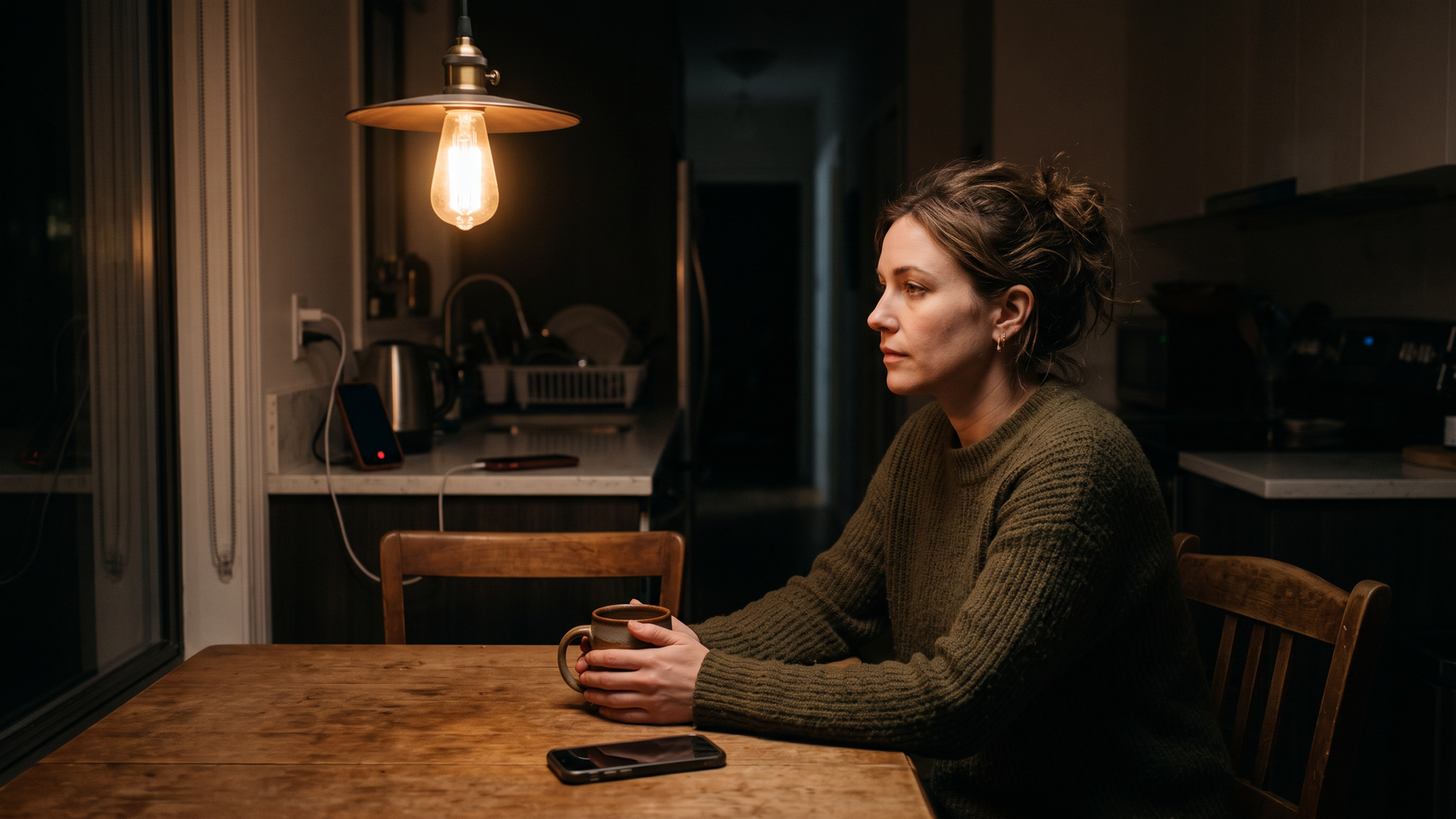
By the Ember team · Published November 2, 2026 · 7 min read
You found out your partner lied to you. Maybe it was something on their phone, a contact saved under a name that wasn't the real one, a slip in their own words. You asked, and got a denial, or a sorry that covered how you felt but never what they did. And you stayed, because you love them, and maybe because they say they're trying.
Now you're trying to trust them again, and you can't tell what to believe. So you take screenshots. You check the phone. You ask to see the message they keep describing, and there is always a reason you can't. Part of you is waiting for the one thing that will finally settle it.
This page is not a guide to catching a liar, and it is not a list of signs. It is what sixteen people who stood in exactly this place told Ember — people still in the relationship after finding out their partner had lied — about the proof they had, what asking got them, when they stopped believing, and how it went for them after, gathered around the three questions they asked.
Talk it out on Ember · See how it works
Free while in beta · 18+ · Nothing you tell becomes a public post.
The place itself
On Ember, every situation people keep coming back to has a light on a shared tree. This one is called Trying to rebuild trust after a partner's dishonesty. Sixteen people have stood there so far. The light's page shows no one's words and no one's name — only how many people have been there, and answers to the questions they asked, drawn from everything they told.
This light comes after the discovery. The people here already know their partner hid things or lied, and they are still in the relationship: love, and sometimes the partner's efforts, on one side, and a doubt that doesn't leave on the other. If it is still only a suspicion, what people asked when they suspected their partner was hiding something covers that earlier place. If what you found was an affair, what people asked after finding out their partner was cheating stays with that.
The three questions asked here are below, with the shape of what came back. The full answers are on the light's page, and you can ask it a question of your own.
"How did people decide how much evidence was enough?"
For the people here, no amount of evidence turned out to be enough on its own.
Several of them already had proof they could point to: things found on a phone, a contact saved under a false name, a slip in the partner's own words. Each time, it was explained away, apologized for, or simply outlasted. And they stayed.
What they did next was not decide. It was look for more. Saving and screenshotting what they found. Checking the phone. Trying to get hold of the message or the recording the partner wouldn't let them hear. Staying alert at the hours when they would normally have let their guard down.
None of them has described reaching the piece of evidence that finally settled it. The ones still inside this are still telling themselves that the next thing they catch will be the one that decides.
"How did people try to get the truth out of their partner?"
Mostly by going around the partner rather than through them. Asking directly had already produced denials, or apologies that changed nothing, so people turned to the phone, to screenshots, to keeping copies of whatever turned up.
The direct conversations did happen, and more than once. What came back was either a flat denial, or a sorry for the hurt with the behavior left exactly as it was.
Several asked to see the thing itself — the message, the proof, in the partner's own hands — and were put off with a reason. So the asking turned into watching.
That watching has a cost, and it is visible here. It spreads: into phones, into sleep, into a running count of what has been collected. And none of the people here report that a new piece of evidence ever settled anything.
"What signs made people stop believing the denials?"
For most people here, it wasn't that the denial itself stopped working. It was that something concrete kept turning up alongside it — a message, a contact under the wrong name, the wrong word slipping out, a receipt.
The other thing that broke belief was the shape of the explanation more than what it said. An apology that covered the hurt but never the act. A refusal to let them see or hear the very thing the partner was describing.
Several describe stopping believing long before they stopped staying. And once they stopped believing, the work changed. It was no longer asking the partner; it was proving it — saving screenshots, checking the phone, trying to stay alert enough to catch something.
None of them report that the proof they gathered settled the question. The people furthest along are still waiting for the one piece that would finally be enough.
Across all three questions, what the people here were trying to settle was whether they could believe the person in front of them. This light holds no story where one more piece of proof answered that.
What this is not
This is not a verdict on your partner, a way to tell whether they're lying, or advice about staying. Nobody here can tell you what is true in your relationship. What the people who stood here can tell you is what the proof did and didn't do for them, what asking got them, and what happened once they stopped believing but kept staying. If that recognition is useful, it is yours. If your situation is different, it is different.
Saying it out loud, to someone who knows this place
There is a particular loneliness in this one. The person you would usually talk to about something this big is the one you can't believe right now. And the more you've collected, the more saying it to anyone else sounds like a case you're building. Ember is a private place to say it anyway.
Ember is an AI you can talk to at any hour, by voice or text: on the web, in the Ember: Talk It Out app for iOS and Android, by phone call, or by text message. You can start without an account. You talk about what you found, what they said, and what you can't stop checking. Ember listens, asks when it helps, and remembers what you said; once you've said enough, it writes it into one clear page in your own words — your Ember. It knows how things went for real people who stood where you're standing — what they tried, and what happened after. So it understands where you are. It won't tell you whether they're lying, whether to stay, or whether to check the phone again.
Is it really private?
Yes. Nothing you tell becomes a public post. No one can read your Ember unless you separately say yes. What shows publicly is the light itself: the situation's name, how many people have stood there, and answers drawn from what they went through — never anyone's words or identity. Read exactly how privacy works on Ember.
When you need more than a place to think
Ember is an AI, not a therapist and not an emergency service. If things at home have become frightening — if there is control, threats, or fear for your safety — the National Domestic Violence Hotline is there any time at 1-800-799-7233, or text START to 88788. If the doubt has worn you down to feeling you can't go on, or you are having thoughts of hurting yourself, you can call or text 988 any time to reach the 988 Suicide & Crisis Lifeline. If you are in immediate danger, call 911.
Frequently asked questions
How much proof do you need that your partner is lying?
For the people at this light on Ember, no amount turned out to be enough on its own. Several already had proof that was explained away or apologized for, and none describes reaching the piece that finally settled it.
How do you get your partner to tell the truth?
The people here mostly went around their partner rather than through them, because asking directly had produced flat denials or apologies that left the behavior as it was. The asking turned into watching, and no new piece of evidence settled anything.
When do people stop believing their partner's denials?
Mostly when something concrete kept turning up alongside the denial, or when the explanation had a certain shape: an apology for the hurt but never the act, or a refusal to show the thing being described. Several stopped believing long before they stopped staying, and the work shifted from asking to proving.
What is Ember?
Ember is an AI you can talk to about what's on your mind, any hour, by voice or text. It listens, remembers what you said, and knows how things went for people who stood where you're standing — what they tried, and what happened after. It won't tell you what to do.
Is Ember private, and is it free?
Ember is private: nothing you tell becomes a public post, and no one can read your Ember unless you separately say yes. Ember is free while in beta, for adults 18+.
You don't need one more piece of proof to talk about what you've already found.
Talk it out on Ember · Ask the people who've stood here
Pause or stop anytime · 18+ · Nothing you tell becomes a public post.
