What people bring
They pull me close, then push me away: why do I still stay?
Let in, then shut out, hot and cold? What 7 people who stood here asked on Ember, and how it went for them once the contact turned practical.
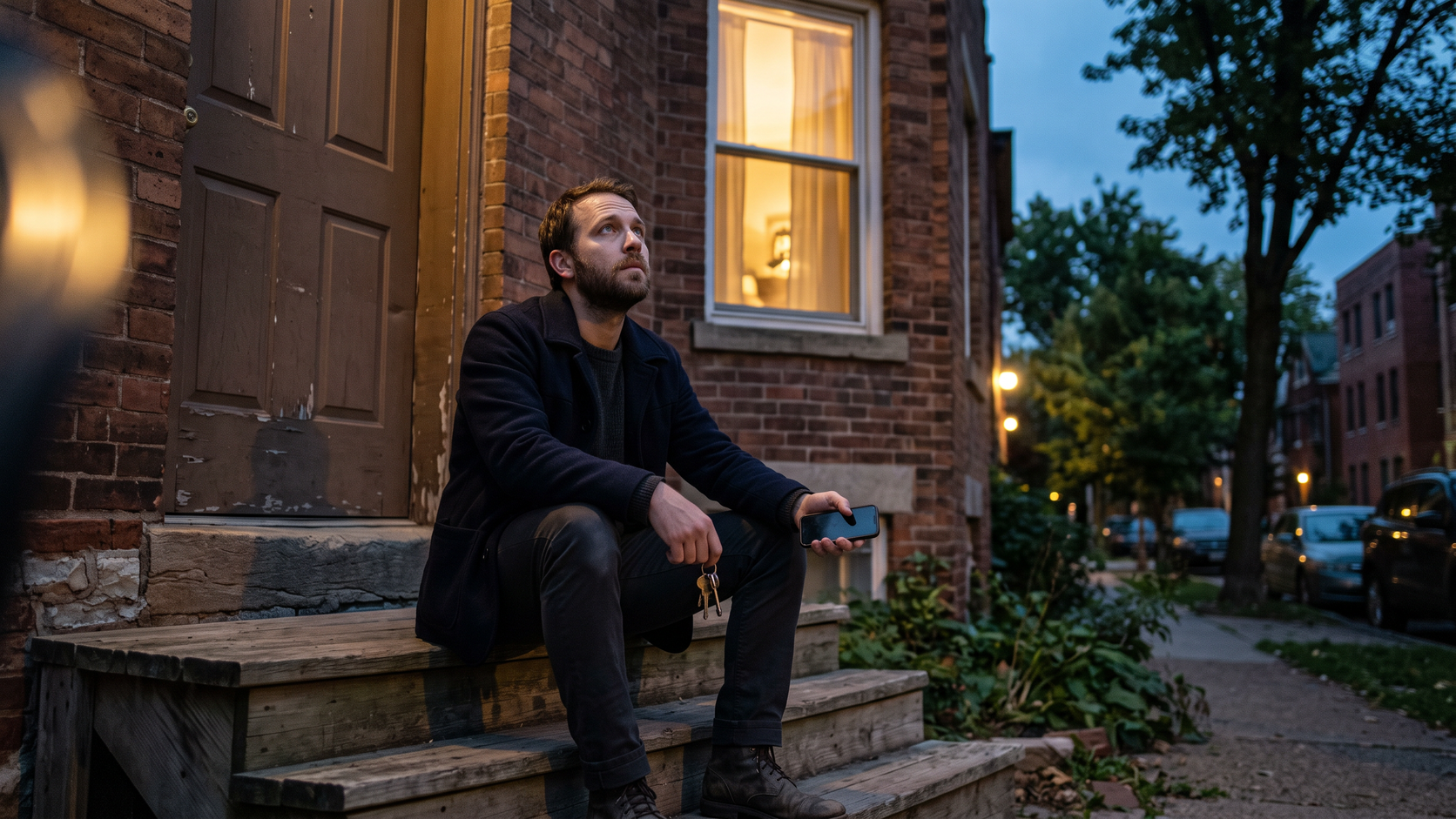
By the Ember team · Published November 5, 2026 · 7 min read
Someone let you in. For a while it felt like you had been given a place: in their life, close enough that you stopped wondering whether you belonged there. Then they pulled back. The warmth went out of how they talked to you, the door you had walked through so easily was shut, and you were standing outside something you thought was yours.
And you are still in contact. Maybe a shared life didn't end when the closeness did. Maybe you've seen them go cold before and come back, so this silence doesn't feel final yet. You may have told them plainly how it felt, and watched it get brushed off.
This page will not tell you what is wrong with the person who ran hot and cold, or whether they will come back. It is what seven people who stood in exactly this place told Ember — why they stayed in contact, how they came to see the pattern, and what happened to the hurt once the contact turned practical — gathered around the three questions they asked.
Talk it out on Ember · See how it works
In beta · 18+ · Nothing you tell becomes a public post.
The place itself
On Ember, every situation people keep coming back to has a light on a shared tree. This one is called Being welcomed into closeness and then pushed away. Seven people have stood there so far. The light's page shows no one's words and no one's name — only how many people have been there, and answers to the questions they asked, drawn from everything they told.
If the pushing away happens with a partner in the middle of fights, what people asked when a partner pushes them away stays with that. If it's an ex who keeps coming back without committing, what people asked about being kept as a backup does.
The three questions asked here are below, with the shape of what came back. The full answers are on the light's page, and you can ask it a question of your own.
"Why do people stay in contact after being pushed away?"
For most of the people here, staying in contact was not a decision they made fresh each day. It was what was left over: the closeness had been cut, but something practical had not been cut with it — a shared life, or an everyday dependence.
The other thing keeping them there was memory. Some of them had seen this before: the person pulled away, and then came back. That history made the current silence feel provisional, a pause rather than an ending.
Several of them tried explaining themselves. They named the hurt plainly to the person who had withdrawn, hoping to have it acknowledged. Every time, that reaching was met with something else: dismissal, the hurt being made smaller than it was, or more distance.
The ones who found some footing got there in one of two ways. Some let the contact shrink until it was small and functional. Others stopped reaching altogether. Either way, the feelings stayed exactly where they were. They simply stopped being handed to the other person.
"How do people recognize this as a repeating pattern in their life?"
Almost never during the closeness. For the people here, the recognition came after the withdrawal, when they noticed that the shape of what had just happened looked like something older.
What made it visible was usually not the other person's behavior but their own reaction. They reached harder at exactly the moment someone pulled back, and then felt embarrassed for having reached.
For some of them, the pattern showed up as a fear with a name: the sense that this distance was about to confirm something they already believed about being left. The fear arrived before there was any evidence. Noticing that it came first was, for them, the recognition itself.
And a few only saw the pattern once they stopped trying to explain themselves to the person who had pulled away. The silence that followed gave them room to look at what they had done, rather than only at what had been done to them.
"How does the hurt change once the relationship becomes practical?"
The people here who still had to see or depend on the other person found out quickly that making the contact practical changes what gets said, not what gets felt.
They kept their exchanges plain. They stopped pursuing. And the ordinary back-and-forth still landed as an injury, because the other person's words carried the same weight they had carried when the closeness was real.
What did change was the picture of the other person. Some of the people here stopped seeing them as a safe place at all, and found that letting go came easier once they had. Others kept the practical surface in place while still reaching, underneath, for the belonging and a way back.
The ones who found some footing were not the ones who managed the contact best. They were the ones who let the other person's behavior change their idea of who that person was.
What this is not
This is not an explanation of why someone runs hot and cold, or a verdict on the person who pulled away. Nobody here can tell you if they will come back this time. What the people who stood here can tell you is why they stayed, how they came to see the pattern, and what the hurt did once the contact turned practical. If that recognition is useful, it is yours. If your situation is different, it is different.
Saying it out loud, to someone who knows this place
There is a particular loneliness in this one. From the outside, nothing has ended, so it is hard to explain why an ordinary message can still hurt — and the one person you most want to tell is the one who stopped listening. Ember is a private place to say it anyway.
Ember is an AI you can talk to at any hour, by voice or text: on the web, in the Ember: Talk It Out app for iOS and Android, by phone call, or by text message. You can start without an account. You talk about what it was like to be let in, the moment it changed, and the contact that's still there. Ember listens, asks when it helps, and remembers what you said; once you've said enough, it writes it into one clear page in your own words — your Ember. It knows how things went for real people who stood where you're standing — what they tried, and what happened after. So it understands where you are. It won't tell you whether to keep reaching, when to stop, or what the other person meant.
Is it really private?
Yes. Nothing you tell becomes a public post. No one can read your Ember unless you separately say yes. What shows publicly is the light itself: the situation's name, how many people have stood there, and answers drawn from what they went through — never anyone's words or identity. Read exactly how privacy works on Ember.
When you need more than a place to think
Ember is an AI, not a therapist, a counselor, or an emergency service. Being shut out by someone you thought you belonged with can weigh more than anyone around you sees. If the hurt has turned into despair, or into thoughts of harming yourself, you don't have to explain it well or be sure it's serious enough: you can call or text 988 any time to reach the 988 Suicide & Crisis Lifeline, and someone will be there to listen. If you are in immediate danger, call 911.
Frequently asked questions
Why do I keep staying in contact with someone who pushed me away?
For the people at this light on Ember, staying was rarely a fresh choice. It was what was left when something practical — a shared life, an everyday dependence — hadn't been cut along with the closeness, and when a history of the person pulling away and coming back made the silence feel provisional.
How do you know if being pulled close and pushed away is a pattern?
For the people here, it showed up afterward, mostly in their own reaction: reaching harder just as someone pulled back and then feeling embarrassed about it, or a fear of being left that arrived before any evidence did.
Does it hurt less once the relationship is only practical?
Not much, for the people here. Keeping the contact plain changed what got said, not what got felt, and ordinary exchanges still landed as injuries. The ones who found some footing were not the ones who managed the contact best, but the ones who let the other person's behavior change who they thought that person was.
What is Ember?
Ember is an AI you can talk to about what's on your mind, any hour, by voice or text. It listens, remembers what you said, and knows how things went for people who stood where you're standing — what they tried, and what happened after. It won't tell you what to do.
Is Ember private, and does it cost anything?
Ember is private: nothing you tell becomes a public post, and no one can read your Ember unless you separately say yes. Ember is in beta, and we’re starting to test subscriptions with some new accounts. Most accounts aren’t asked to subscribe. If yours is, you’ll see it up front — $9.99 a month after a free trial, and nothing is charged unless you choose to subscribe. Ember is for adults 18+.
The hurt doesn't have to go to them to be said.
Talk it out on Ember · Ask the people who've stood here
Pause or stop anytime · 18+ · Nothing you tell becomes a public post.
