What people bring
How to do chores when depressed: what others did first
Depressed, and making yourself do the basic things around the house? What 5 people who stood here asked on Ember, and how it went for them.
By the Ember team · Published November 13, 2026 · 6 min read
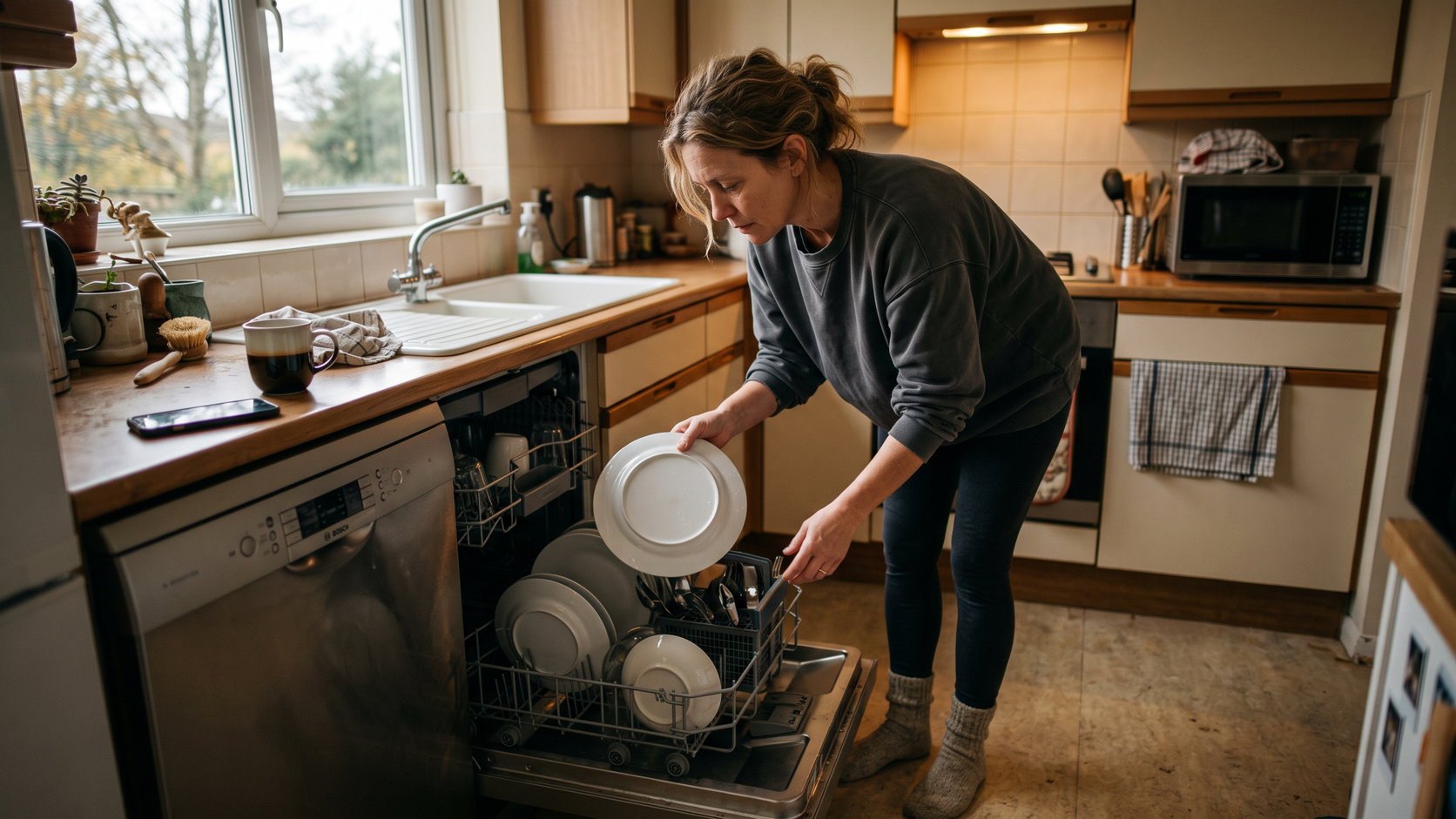
You're depressed, and you're making yourself do the basic things around the house. Even ordinary household tasks feel difficult, and you get up and do one anyway: unloading the dishwasher, or one stretch of floor.
Maybe you're waiting for motivation, or for the weight of everything to lift. Maybe the people closest to you haven't noticed, or noticed and pulled back. And when one thing does get done, it can bring something with it: relief, renewed self-respect, or a sense that something has started to move.
This page isn't a guide to treating depression, and it isn't a list of cleaning tips. It is what five people who stood in exactly this place told Ember — how they got themselves to start, which small task came first, and whether anyone else noticed or helped — gathered around the three questions they asked.
Talk it out on Ember · See how it works
In beta · 18+ · Nothing you tell becomes a public post.
The place itself
On Ember, every situation people keep coming back to has a light on a shared tree. This one is called Getting yourself to do basic chores while depressed. Five people have stood there so far. The light's page shows no one's words and no one's name — only how many people have been there, and answers to the questions they asked, drawn from everything they told.
What the people here share is this: depression makes even ordinary household tasks feel difficult, and they manage to get up and do them anyway.
This page is only about getting a household task done while depressed; if what you're carrying is a wider exhaustion that rest doesn't fix, what people asked when they felt too drained to do anything stays with that. If the harder part is that no one around you seems to see it, pretending to be okay when you're not does.
The three questions asked here are below, with the shape of what came back when this was written; the answers are rewritten as people come and go. The full answers are on the light's page, and you can ask it a question of your own.
"How did people get themselves to start?"
The people here who started did it by shrinking the task: down to a single action they could manage, or one small section of a larger chore.
Some found their footing by turning a chore into a ritual of care. Others got moving through small, automatic motions, like making coffee or unloading the dishwasher.
The people here who moved forward kept their focus on what was immediately in front of them. Those who stayed stuck were often waiting — for motivation, or for the weight of their circumstances to lift.
"What small task did people do first?"
The people here who managed to move chose tasks small enough to avoid the weight of the whole house.
Some chose a single section of a floor. Others got one job done, like cleaning up after a pet or dealing with the dishwasher, to make a small clearing.
The people here differed in why they did them: whether the small task was a way to clear a path for ritual and pride, or a way to keep from being judged as lazy.
"Did anyone else notice or help?"
The people here found that others often stayed distant, or didn't offer the recognition they needed.
One person let their spouse see what they were struggling with; the spouse acknowledged it, but withdrew. Another was dealing with a family member whose actions brought on new anxiety.
Where the people here differed was in whether they sought connection outside, such as a friend or a therapist, or faced the lack of response from those closest to them alone.
What this is not
This is not a guide to treating depression, a cleaning schedule, or a list of tips. Nobody here can tell you how to make the motivation come, or what will make the house feel lighter. What the people who stood here can tell you is how they got themselves to start, the small task that came first for them, and whether anyone around them noticed. If that recognition is useful, it is yours. If your situation is different, it is different.
Saying it out loud, to someone who knows this place
What it takes to do one ordinary thing can be hard to explain. From the outside it's a chore; from the inside, it's getting up and doing it anyway. And the people closest to you may not have seen it. Ember is a private place to say it, whenever it comes back.
Ember is an AI you can talk to at any hour, by voice or text: on the web, in the Ember: Talk It Out app for iOS and Android, by phone call, or by text message. You can start without an account. You tell it what you got done today, what you couldn't, and what's been weighing on you. Ember listens, asks when it helps, and remembers what you said, so you don't have to start from the beginning each time; once you've said enough, it writes it into one clear page in your own words — your Ember. It knows how things went for real people who stood where you're standing — what they tried, and what happened after. So it understands where you are. It won't tell you what you should be getting done, or how fast.
Is it really private?
Yes. Nothing you tell becomes a public post. No one can read your Ember unless you separately say yes. What shows publicly is the light itself: the situation's name, how many people have stood there, and answers drawn from what they went through — never anyone's words or identity. Read exactly how privacy works on Ember.
When you need more than a place to think
Ember is an AI, not a doctor, a therapist, or an emergency service. Depression is something you can see a doctor or a therapist about, and you don't have to wait until you can explain it well or feel sure it's serious enough. If the heaviness has turned into not wanting to be here, or into thoughts of harming yourself, you can call or text 988 any time to reach the 988 Suicide & Crisis Lifeline, and someone will be there to listen. If you are in immediate danger, call 911.
Frequently asked questions
How do you get yourself to do chores when you're depressed?
The people at this light on Ember who started did it by shrinking the task to a single action they could manage, or one small section of a larger chore. Some turned a chore into a ritual of care; others got moving through small, automatic motions, like making coffee or unloading the dishwasher. The ones who moved forward focused on what was immediately in front of them, while those who stayed stuck were often waiting for motivation, or for the weight of their circumstances to lift.
What small task do people start with when they're too depressed to clean?
The people here who managed to move chose tasks small enough to avoid the weight of the whole house: a single section of a floor, or one job like dealing with the dishwasher, to make a small clearing. They differed in whether the task was a way to clear a path for ritual and pride, or a way to keep from being judged as lazy.
Does anyone notice when you're depressed and struggling to keep up at home?
The people here found that others often stayed distant, or didn't offer the recognition they needed. One person let a spouse see the struggle; the spouse acknowledged it, but withdrew. The people here differed in whether they sought connection outside, such as a friend or a therapist, or faced the lack of response from those closest to them alone.
What is Ember?
Ember is an AI you can talk to about what's on your mind, any hour, by voice or text. It listens, remembers what you said, and knows how things went for people who stood where you're standing — what they tried, and what happened after. It won't tell you what to do.
Is Ember private, and does it cost anything?
Ember is private: nothing you tell becomes a public post, and no one can read your Ember unless you separately say yes. Ember is in beta, and we’re starting to test subscriptions with some new accounts. Most accounts aren’t asked to subscribe. If yours is, you’ll see it up front — $9.99 a month after a free trial, and nothing is charged unless you choose to subscribe. Ember is for adults 18+.
You can say out loud how hard the small things have been.
Talk it out on Ember · Ask the people who've stood here
Pause or stop anytime · 18+ · Nothing you tell becomes a public post.
