What people bring
Why did they block me out of nowhere? Should I reach out?
Blocked out of nowhere by someone you were dating? What eight people who stood here asked Ember, and how it went for them after.
By the Ember team · Published October 23, 2026 · 7 min read
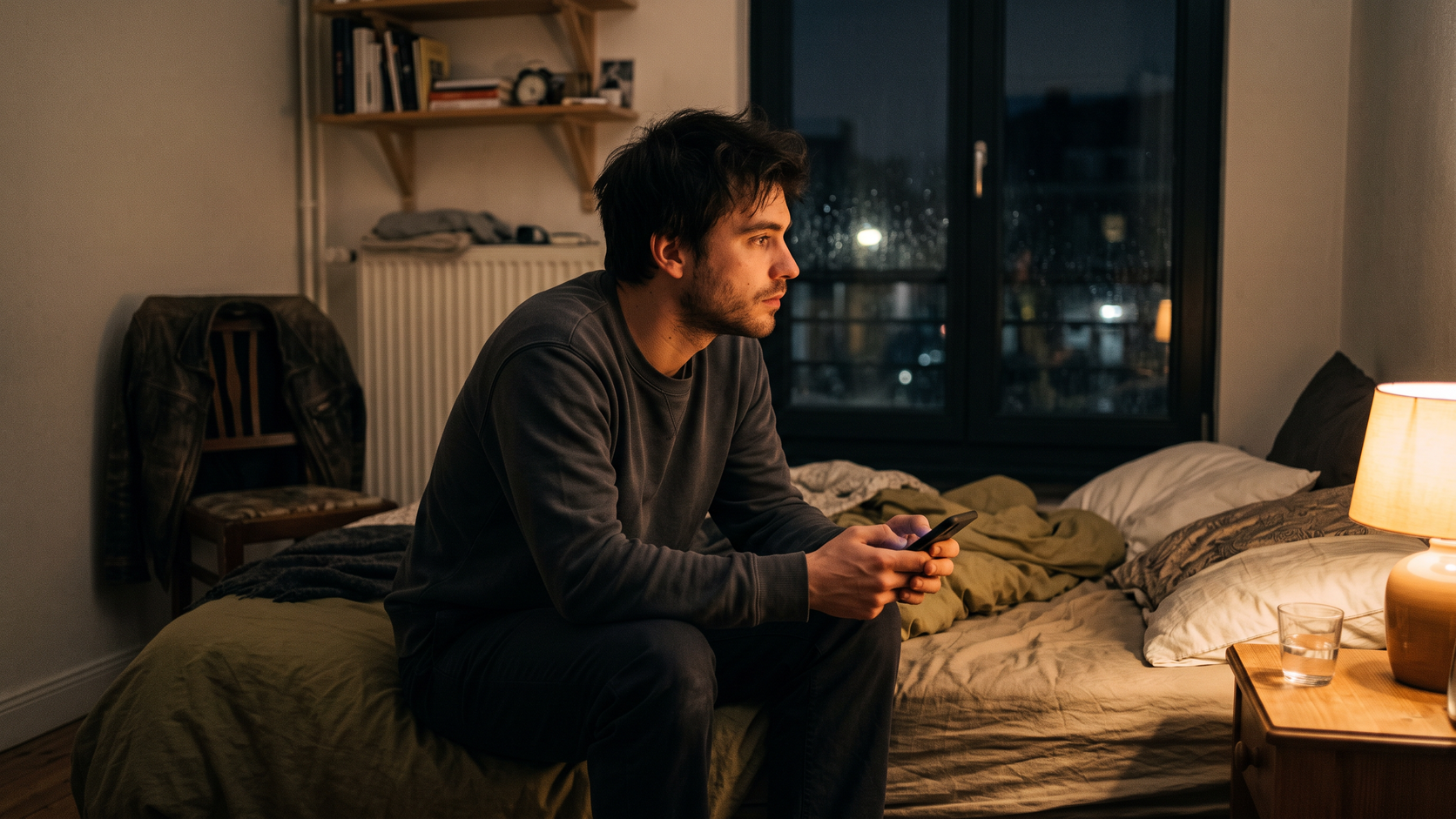
It was going well, or it felt like it was: warm, easy, both of you in it. Then a message wouldn't go through. Their profile was gone. The call went straight to voicemail. Somewhere between one day and the next, you had been blocked, everywhere, and there had been no conversation.
This isn't the slow fade of someone going quiet. A block is a door closed on purpose, and it closes the one thing you want most: the chance to ask. So you go back over the last few messages looking for the one that did it. If they gave a reason, you wonder whether it was the real one. If they gave none, you wonder what changed. And underneath both sits the question of whether to try one more way to reach them.
This page is not a list of reasons people block. It is what eight people who stood in exactly this place told Ember — what they tried in order to get an answer, what they did and didn't see coming, and how the checking slowed for some of them — gathered around the three questions they asked.
Talk it through on Ember · See how it works
Free while in beta · 18+ · Nothing you say is posted.
The place itself
On Ember, every situation people keep coming back to has a light on a shared tree. This one is called Being abruptly blocked by someone you were dating. Eight people have stood there so far. The light's page shows no one's words and no one's name — only how many people have been there, and answers to the questions they asked, drawn from everything they told.
This light is about the block itself: a door someone closed on purpose, without a conversation. If the person went quiet but never blocked you, that silence has its own light, Waiting for someone who suddenly stopped responding, and its own page here, when someone suddenly stops replying.
It is a small light, and where it doesn't hold much, its answers say so. The three questions asked of it so far are below, with the shape of what came back. The full answers are on the light's page, and you can ask it a question of your own.
"What did people try to get answers, and did it work?"
Nobody here got the explanation they went looking for.
What they tried was what most people would try. Asking plainly what had changed. Trying to explain themselves out of an accusation. Calling once the silence had started. Planning to say it face to face. Every one of those met the same thing from the other side: more silence, or another block. For some of them, the asking was the very thing the block came down on.
Others kept a side door open instead. They listened to what people they both knew passed back, or stayed open to whatever contact the other person still chose to make. That brought words, but not clarity. The person on the other end held that door, and could close it again whenever they liked.
The ones who found some footing did not get an answer either. What changed was that they stopped treating the missing explanation as the thing that would settle it. They read the block itself as the answer about what the other person was willing to do.
"What signs were missed before the sudden silence?"
For most of the people here, there was no earlier sign. That is the part they keep coming back to. It felt warm and mutual right up to the day it stopped.
What several of them point to, looking back, is not a warning they ignored. It is a change in the other person's tone in the last stretch. Ordinary things they said began to land as accusations, or as proof that something was wrong with them.
The ones who noticed that change and tried to name it — asking what was different, explaining what they had actually meant — found that their asking was exactly where the silence landed.
A few others did know something real beforehand: dishonesty, or another relationship running alongside theirs. Knowing did not get them a conversation. Contact was closed before they could bring it up.
"How did people stop checking for a response?"
Nobody here tells it as a clean stopping point. The light holds more about what people kept reaching for than about the day they stopped.
What does show up is when the checking slowed. It slowed when people stopped treating the silence as a conversation still waiting to be finished, and started treating it as the answer.
For some, that came as a change in what they thought the problem was. At first it looked like bad luck, or a misunderstanding they could still clear up. Later it looked like a choice the other person had made, and would not explain.
The ones still checking are the ones holding a question only the other person can answer. For them the waiting has not resolved, and part of what they are still unsure about is whether the waiting itself is a waste.
Some cut the channel themselves rather than wait for it to go quiet. That ended the checking. It did not end the not-knowing.
What this is not
This is not an explanation of why they blocked you, and it is not advice. Nobody here can tell you what the other person was thinking, or whether to try another way to reach them. What the people who stood here can tell you is what asking did and didn't get them, what they saw and didn't see beforehand, and what let a few of them stop checking. If that recognition is useful, it is yours. If your situation is different, it is different.
If it was a partner you had built a life with, and they left without explaining, your partner left out of nowhere is written for that.
Saying it out loud, to someone who knows this place
There is a particular loneliness in this one: the only person who could explain it has made sure you can't ask. And saying it to friends tends to turn into a verdict, on them or on you. Ember is a private place to say it anyway.
You talk, by voice or text, about what happened and what you keep going back over. Ember listens, asks when it helps, and keeps what you said as one page in your own words — your Ember. It has heard from people who stood in this same place and in places close to it, and many of them kept telling it what came after. So it can think with you about how this tends to go, without telling you what to do. Sometimes, when more thinking can't settle it, Ember may show you a short page on how it went for a few people who stood here — in Ember's words, with no names and no one's words. It won't tell you whether to reach out again.
Is it really private?
Yes. Your page is never posted, never open to search engines, and never tied to your name or voice. No one can read your Ember unless you separately say yes. The only thing that shows publicly is the light itself: the situation's name and how many people have stood there. Read exactly how privacy works on Ember.
When you need more than a place to think
Ember is an AI, not a therapist and not an emergency service. If being cut off has turned into something heavier — if it has started to feel hopeless, or you are thinking about hurting yourself — the 988 Suicide & Crisis Lifeline is there any time: call or text 988. If you are in immediate danger, call 911.
Frequently asked questions
Why did they block me out of nowhere?
Nobody at this light on Ember got that explanation from the person who blocked them. For most, there was no earlier sign; it felt warm and mutual until it stopped. Several noticed afterward a change in tone in the last stretch, when ordinary words started landing as accusations.
Should I reach out after being blocked?
The people here who reached out — asking plainly, explaining themselves, calling, planning to say it in person — were met with more silence or another block, and for some the asking was what set off the block. Words passed along through people they both knew brought no clarity. The ones who found footing read the block itself as the answer.
How do you stop checking after being blocked?
Nobody here describes a clean stopping point. The checking slowed when people stopped treating the silence as an unfinished conversation and started treating it as a choice the other person had made and would not explain. Some cut the channel themselves, which ended the checking but not the not-knowing.
What is Ember?
Ember is an AI you talk to about a real situation in your life, by voice or text. It keeps what you said as one private page in your words, and it knows how things went for people who stood where you're standing — what they tried, and what happened after.
Is Ember private, and is it free?
Both. Your page is never posted and never tied to your name or voice, and no one can read it unless you separately say yes. Ember is free while in beta, for adults 18+.
They closed the door. You can still say what's on your side of it.
Talk it through on Ember · Ask the people who've stood here
Pause or stop anytime · 18+ · Nothing is posted.
