Ways to be heard
The holiday blues: why this time of year feels heavy
Why the holidays can feel heavy: what polls found about holiday stress and grief, the holiday-suicide myth, holiday blues vs. SAD, and what helped people.
By the Ember team · Published November 22, 2026 · 6 min read
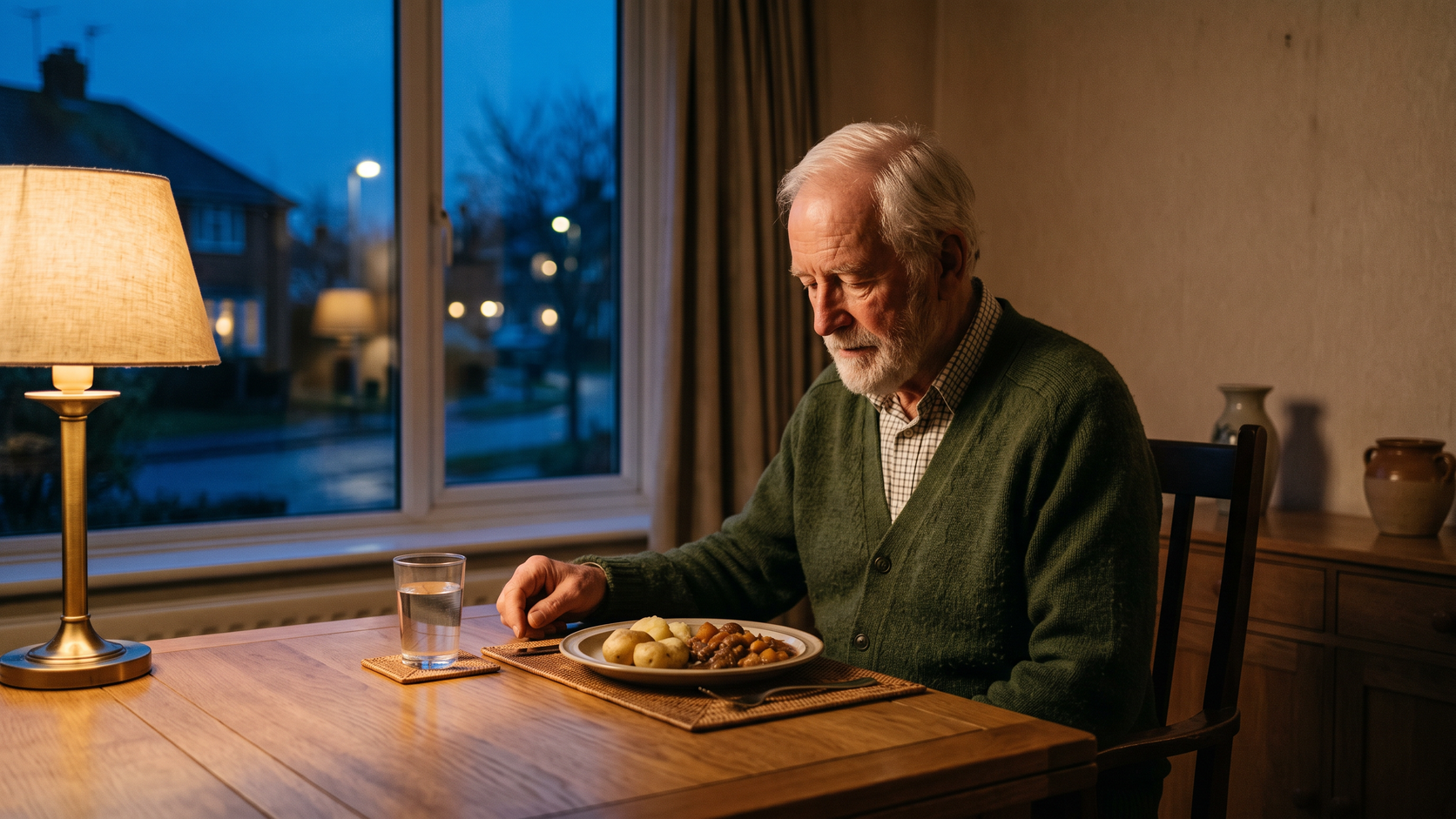
The lights are going up across the street. Maybe this is the first year without her at the table. Maybe your son won't be home again, and someone will ask why. Maybe everyone seems to be gathering somewhere, and you'll be at home. Why does this time of year feel so heavy, and is it only you?
It isn't. When the American Psychiatric Association polled 2,203 US adults in November 2025, the most common source of holiday anxiety was grief over a loved one, named by 48%.
The short answer is that many people find the season hard, and what they name is concrete: someone missing, gifts, family, being alone. The "holiday blues" aren't the same as seasonal depression. And one common belief doesn't hold up: in US data, December typically has the year's lowest daily suicide rate, not the highest.
What the research says so far
Two national polls, 2025. The American Psychiatric Association's Healthy Minds Poll asked 2,203 adults online in early November. Grief over a loved one led (48%), then affording or finding gifts (46%), difficult family dynamics (32%) and being lonely (31%). Still, more said the holidays help their mental health (44%) than hurt it (21%). In December, the Marist Poll asked 1,440 US adults whether the season is more stressful or more fun: 50% said more stressful, up from 37% in 2022. What it doesn't show: how low anyone felt, or for how long.
Wright State University, 2011: the "Christmas effect." Randy and Lori Sansone reviewed studies since 1980 on Christmas and mental health. Mood may worsen around Christmas, and alcohol-related deaths may rise. But psychiatric emergency visits, self-harm, and suicide attempts and deaths tended to fall over the holiday, then rebound after it. One 1980 study they cite, of 420 college students, traced holiday low moods partly to believing that everyone else is having a good time, in loving families: "clearly a wish, but not necessarily a fact," the Sansones write. What it doesn't show: how things look now; most studies date from the 1980s to the 2000s.
Annenberg Public Policy Center, University of Pennsylvania, 2025. A report on the holiday-suicide myth, drawing on CDC data, found December had the lowest average daily suicide rate of any month in 2024; the highest were August and July. Yet in the center's 2023 national survey, 4 in 5 adults picked December as the time of year with the most suicides. "People may feel sadness around the holidays for various reasons," says research director Dan Romer, "but they should not get the false impression that this sadness has led to a higher suicide rate." What it doesn't show: anything about one person.
Tri-Service General Hospital, Taipei, 2025. Ta-Chuan Yeh, Chih-Sung Liang and colleagues pooled 28 studies of suicide and self-harm on holidays, from 1969 to 2019. Compared with ordinary days, suicide risk was 17% lower on Christmas Day and 33% higher on New Year's Day, a pattern seen in most countries. In both reviews, the rise came after Christmas. What it doesn't show: why. The authors' suggestions, such as hope and closeness at Christmas, weren't tested, and most studies came from developed, mainly Christian countries.
University College London, 2025. Edouard Leaune, Pauline Lau-Taï and Alexandra Pitman reviewed 58 articles on grief around death anniversaries, birthdays and other significant occasions. Though the studies varied widely, they concluded the evidence supports a "bereavement anniversary reaction," physical as well as psychological. What it doesn't show: how common it is.
None of this makes a hard season smaller, or says anything about one person's night. If yours is turning dark, you can call or text 988 any time.
Holiday blues or seasonal depression?
The National Institute of Mental Health separates the two. Seasonal affective disorder is a type of depression that returns with the seasons, with symptoms lasting about four to five months a year. It follows daylight, not the calendar, so holiday stress and family visits "are not the same as SAD." The holiday blues, in NIMH's words, are "feelings of sadness or anxiety brought on by stresses at certain times of the year."
What the season brings to the surface
Behind the numbers are specific things: the first holidays after a death, when grief hits out of nowhere or isn't lighter yet; a grown child who stopped calling, or relatives who keep pulling away; feeling lonely in a full room, or spending the day alone (how to deal with loneliness).
What made the holidays more bearable for some people
- Saying which part is heavy. Under "the holidays" there's often something specific: a chair no one sits in, a call that won't come, a table set for one, a bill. Naming it gives you something to say besides "I'm dreading it."
- Letting someone in on the hard days. On Ember's page for people grieving someone close, those who found some footing let others in on the difficult days, rather than facing anniversaries "alone in their own heads."
- Choosing how much of the season to join. Some keep every tradition, some keep one, some go for an hour, some spend the day another way. None of the research says which is right.
- Finding out how a season like this went for someone else. A first Christmas after a death, a New Year's Eve alone: people who've had one can say what the day was really like. Where to find them.
How we built Ember around this
Ember is an AI. It can't make the season lighter.
You can say what's going on, by text or voice, any hour. Ember listens and tries to understand what you mean. It won't tell you whether to go to the dinner or stay home. Behind the conversation is what real people in similar situations went through, what they tried, and what happened next, so Ember can tell you how it went for people who've been there.
Nothing you tell becomes a public post. No one can read your Ember unless you separately say yes. Ember is an AI; it isn't therapy or an emergency service.
When you need more than a place to think
An AI is not a counselor, a therapist, or an emergency service. If the season has turned into despair, or into thoughts of harming yourself, you don't have to be sure it's serious enough: you can call or text 988 any time to reach the 988 Suicide & Crisis Lifeline. If you are in immediate danger, call 911. In California, the Institute on Aging's Friendship Line (888-670-1360) is a free, confidential 24/7 line for adults 60 and older and adults with disabilities; you don't have to be in crisis to call. Questions about your own mood and health are for a doctor who knows you. More options are in I'm lonely: who can I talk to?
Frequently asked questions
Why do I feel sad during the holidays?
Many people do. In a 2025 national poll, the most common source of holiday anxiety was grief over a loved one (48%), then affording or finding gifts, family tension and loneliness.
Do suicides go up during the holidays?
Not over the season as a whole. In US data, December typically has the year's lowest average daily suicide rate. A 2025 review found risk lower on Christmas Day but higher on New Year's Day. If you're struggling, you can call or text 988 any time.
What is Ember?
Ember is an AI you can talk to about what's on your mind, any hour, by voice or text. It listens, remembers what you said, and knows how things went for people who stood where you're standing — what they tried, and what happened after. It won't tell you what to do.
Is Ember private, and does it cost anything?
Ember is private: nothing you tell becomes a public post, and no one can read your Ember unless you separately say yes. Ember is free while it’s in beta. Texting Ember is free, and calls come with 20 free minutes a month; in the US you can buy more, from $4.99 for 35 minutes, and they don’t expire. Ember is for adults 18+.
The lights go up whether you're ready or not. You can still say what this year is really like.
Talk it out on Ember
Pause or stop anytime · 18+ · Nothing you tell becomes a public post.
