Ways to be heard
Is empty nest syndrome real? What research says
What studies found about empty nest syndrome: how parents feel when children leave, what happens to marriages, what research can't say, and what helped.
By the Ember team · Published November 21, 2026 · 6 min read
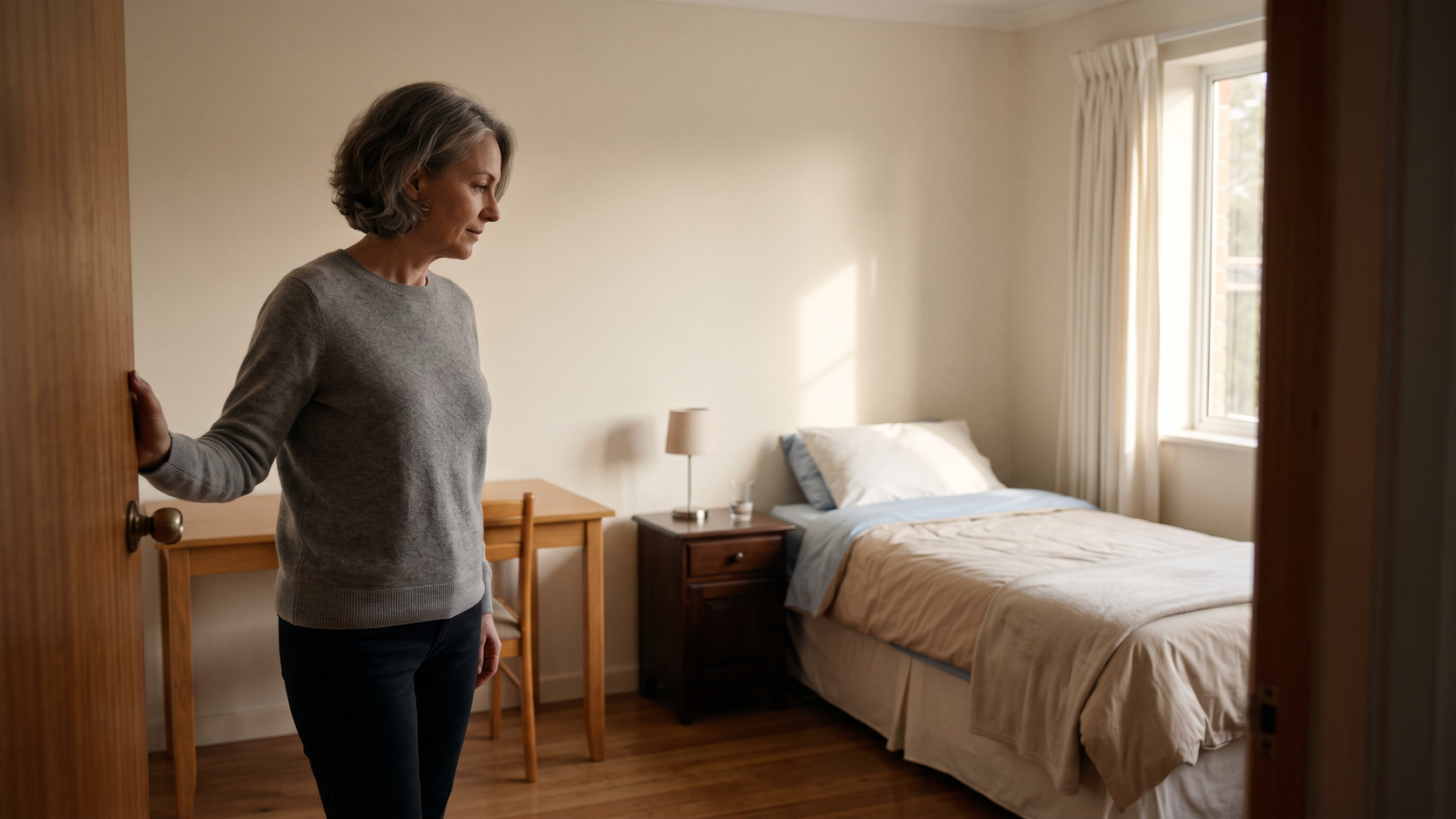
Their bedroom door stays open now. The table is set for fewer; the house is quieter than you remember. You're proud of them. You also catch yourself standing in that doorway. Is this empty nest syndrome? Is it normal, and how long does it last?
When researchers followed 438 Australian women through midlife, those whose last child moved out had, on average, a better year after: better mood, fewer daily hassles. The brighter mood came only for women who hadn't been worried about the leaving beforehand.
The short answer is that the feelings are real, but "empty nest syndrome" isn't an illness; health classifications file it next to adjusting to retirement. In one study, only a minority of parents said they had been through it. For many, it's mixed: missing them, and more room to breathe. And parents today are in touch with grown children far more often than a generation ago.
What the research says so far
"Empty nest syndrome" is a popular name, not a mental disorder. The World Health Organization's classification of diseases lists it under "problems of adjustment to life-cycle transitions," beside adjusting to retirement. The US version files it among things that affect health but aren't illnesses or injuries.
Simon Fraser University, 2009. Barbara Mitchell and Loren Lovegreen interviewed 316 parents in Metro Vancouver in 2006–07, from British, Chinese, Southern European and Indo/East Indian backgrounds. They took empty nest syndrome to mean parents' own reports of depression and emotional distress when children leave home. Only a minority said they had been through it; cultural background and other social and relationship factors affected how likely parents were to report it. What it doesn't show: parents everywhere. It was one city, in parents' own words.
University of Melbourne, 2002. Lorraine Dennerstein and colleagues followed 438 Australian-born women in midlife, yearly for nine years. For the 155 whose last child left, the first year after brought better mood and well-being on average, and fewer daily hassles. The lift in mood came only for women who, at the start, hadn't been worried about their children leaving. What it doesn't show: fathers, or how much the women missed their children.
University Medical Center Hamburg-Eppendorf, 2021. Kaja Kristensen and colleagues followed parents in the German Ageing Survey, a representative survey of adults 40 and over, as their children moved out. Before accounting for changes in health and other circumstances, women's depressive symptoms rose; after, the empty nest wasn't linked to a change in depressive symptoms or loneliness. The authors conclude its consequences "have been overestimated in the past." What it doesn't show: one parent's experience; these are averages, in Germany.
University of California, Berkeley, 2008. Sara Gorchoff, Oliver John and Ravenna Helson followed women's marital satisfaction over 18 years of middle age. It rose, and the rise was linked to the empty nest: not through more time with their partners, but through enjoying that time more. The empty nest wasn't linked to higher overall life satisfaction. What it doesn't show: husbands' side; these are women's averages.
University of Texas at Austin, 2016 and 2017. Karen Fingerman and colleagues asked 247 parents aged 45 to 65, near Philadelphia, about their grown children daily for a week in 2013. 96% had contact with one, and 68% had at least one day when they both enjoyed a grown child and worried about one. In a 2017 review, Fingerman notes that in US data from the mid-to-late twentieth century, only half of parents had weekly contact with a grown child; recent studies found nearly all did, and over half daily, helped by cell phones and texting. What it doesn't show: every family. A small group has the opposite pattern, and 37% of the 2016 parents lived with at least one grown child.
None of this says something is wrong with you if it hurts. Parents meet this change in different ways.
What the quiet can bring up
For some parents, the quiet also shows what was already there. A marriage that ran on school schedules can feel like living with a roommate, and some feel lonely even with people around, a spouse included. If your youngest leaving means you live alone now, it can feel more peaceful and lonelier at once. After twenty years arranged around everyone else, part of you may want something that's only yours.
A grown child who has stopped talking to you is a different situation: why adult children cut off parents. If it's less the quiet house than a restlessness about the life you built, is the midlife crisis real? looks at what research found.
What made the first stretch easier for some parents
- Saying the quiet out loud, and coming back to it. The first time, it may come out as "I'm fine, it's just quiet." The second or third time is often where the real thing shows: the missing, or not knowing what the evenings are for now.
- Leaving room for the relief, too. In the Australian study, mood lifted on average once the last child left; in the diary study, most parents had a day of both enjoying and worrying about their grown children. Relief isn't loving them less.
- Comparing notes with parents a year or two ahead. How the first visits home went, what changed in the marriage, what they did with the extra room. Where to find them.
- Letting someone in your life carry a share. A sister who went through it first, a neighbor whose youngest just left, a counselor of your own. More in how to deal with loneliness.
How we built Ember around this
Ember is an AI. It can't tell you how long this stretch will last.
You can say what's going on, by text or voice, any hour. Ember listens and tries to understand what you mean. It won't tell you what to do with the extra room, or how to feel about it. Behind the conversation is what real people in similar situations went through, what they tried, and what happened next, so Ember can tell you how it went for people who've been there.
Nothing you tell becomes a public post. No one can read your Ember unless you separately say yes. Ember is an AI; it isn't therapy or an emergency service.
When you need more than a place to think
An AI is not a counselor, a therapist, or an emergency service. If the quiet has turned into despair, or into thoughts of harming yourself, you don't have to be sure it's serious enough: you can call or text 988 any time to reach the 988 Suicide & Crisis Lifeline. If you are in immediate danger, call 911. Questions about your own mood and health are for a doctor who knows you.
Frequently asked questions
Is empty nest syndrome real?
The feelings are. But it isn't a mental disorder: health classifications list it as a problem of adjusting to a life change, like retirement. In a Vancouver study, only a minority of parents said they had been through it.
How long does empty nest syndrome last?
None of the studies here measured a typical length. In an Australian study, the year after the last child left was, on average, a better one, though not for women who had been worried beforehand.
What happens to a marriage when the kids leave?
In an 18-year study of women, marital satisfaction rose with the empty nest, through enjoying time with their partner more, not having more of it. Only women were asked.
What is Ember?
Ember is an AI you can talk to about what's on your mind, any hour, by voice or text. It listens, remembers what you said, and knows how things went for people who stood where you're standing — what they tried, and what happened after. It won't tell you what to do.
Is Ember private, and does it cost anything?
Ember is private: nothing you tell becomes a public post, and no one can read your Ember unless you separately say yes. Ember is in beta, and we’re gradually moving to paid subscriptions. If you’re asked to subscribe, you’ll see the price before anything is charged, and you can cancel anytime. Ember is for adults 18+.
You raised them to leave. It's all right if it hurts, and all right if it doesn't.
Talk it out on Ember
Pause or stop anytime · 18+ · Nothing you tell becomes a public post.
