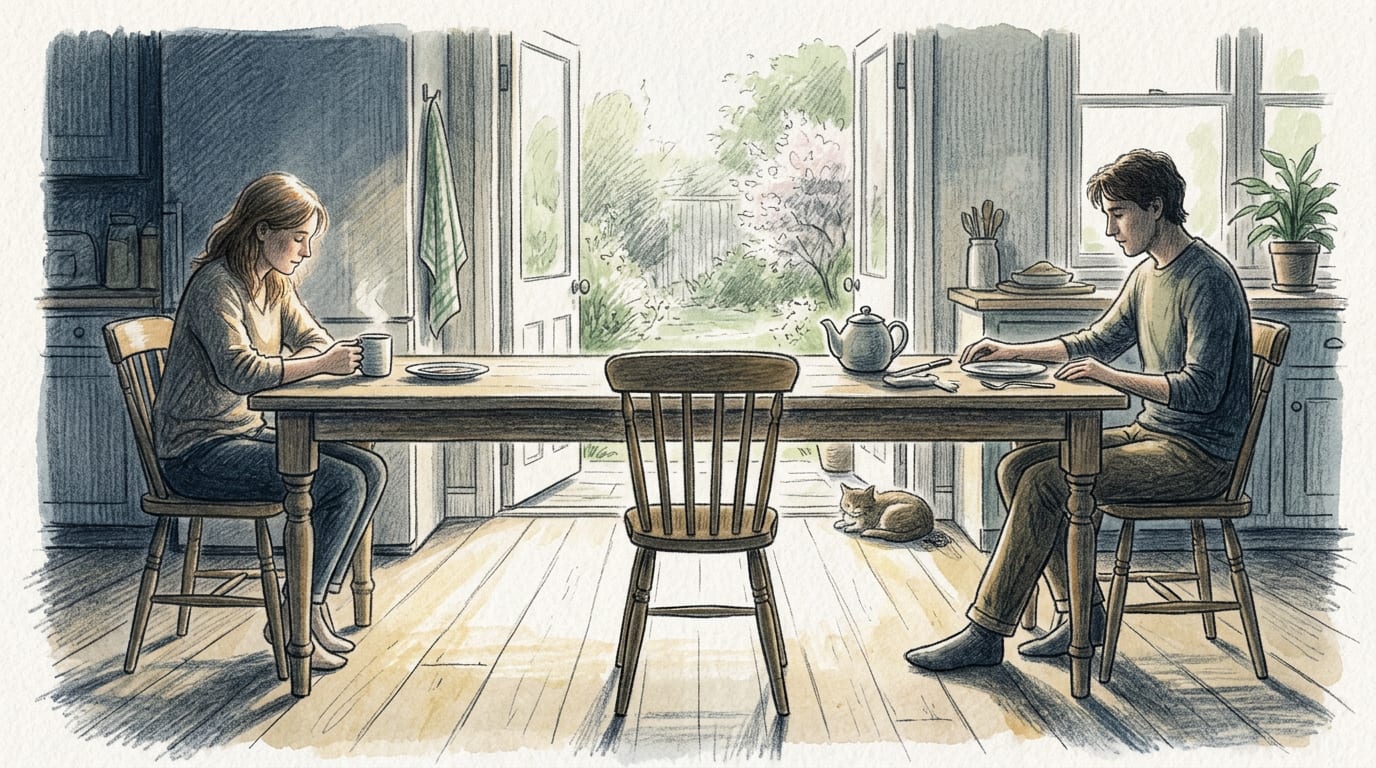
How can I tell whether leaving is the right choice when I still care about her but feel that my efforts have not made the relationship feel close or mutual?

I gave everything. It still wasn’t enough.
5 EmbersAsked 22h ago

I have been trying hard to make my girlfriend happy for about a year, including spending money on gifts and activities, but I still feel lonely, shut out of parts of her life, and unsure that she really knows or wants to know me. I am now wondering whether I should leave.

5 Embers

When Someone Never Asks Back — illustration

When Someone Never Asks Back

I once spoke with an investor while trying to raise funding. They had reached out first, saying they were interested in what we were building, so I went into the conversation expecting some kind of exchange. But no matter what I said, they would answer my questions seriously and then stop. They never asked me anything in return. I realized pretty quickly that they were not actually interested in me or what we were doing. If I am interested in someone, it is hard for me not to ask questions—to understand their thoughts, their details, the way they see things. In a conversation like fundraising, both sides are supposed to be learning about each other. If someone shows no curiosity at all, even after initiating contact, that usually means the interest has disappeared or was never really there. But I do not think the rule applies to every relationship. When I was much younger, I was with someone who was very quiet and reserved. She rarely asked about other people, but over the years we spent together, I came to understand that her feelings ran deep. I learned that from her behavior, not from the questions she asked when we first met. So I still look at the person’s character. If someone is normally expressive and engaged but has no desire to ask about you, I think it is fair to draw a conclusion. If they are naturally silent and private, you cannot judge them so quickly.

An Ember · 4h ago
What Giving Couldn’t Fix — illustration

What Giving Couldn’t Fix

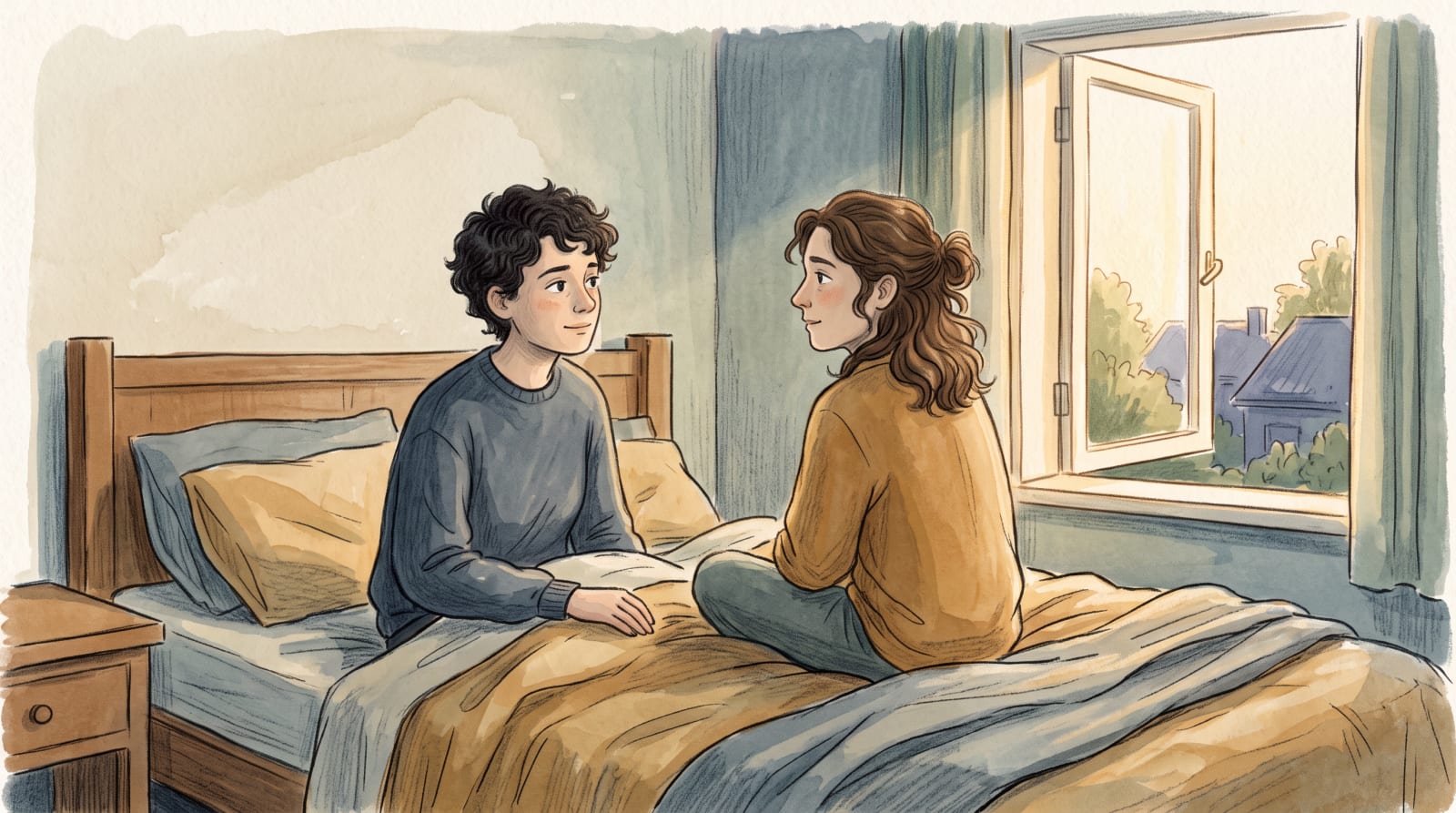
I wanted her to be happy, so I took her to expensive restaurants every day, gave her gifts, and regularly took her traveling. I hoped she would feel that our time together was happy and that I was making an effort. I also wanted us to have a fuller life, because we did not have enough to talk about. We had no mutual friends and not many shared experiences. Gradually, I realized that we often saw things very differently. She would become furious at restaurant staff if the food was slow, argue with strangers in public, or curse at drivers who honked at her. I felt that her behavior showed poor manners, but I could not openly take the other person’s side against her. Our attitudes toward money were different too. She often bought luxury goods or other expensive things far beyond her income. At first I helped pay for them, but eventually I could not afford to keep doing that. She never asked me to take responsibility for her spending. I did it because I thought that, as her boyfriend, I should pay. In the beginning, it also felt like a chance to prove that I could take care of her and be a good boyfriend. In the end, I realized that I had been putting in time, money, and energy, but I was still not happy. The main problem was that our values were different. Experiences and gifts could not support happiness between us, and she did not really pay attention to my thoughts or feelings. No matter how many things I gave, they could not bridge that gap. Nothing dramatic happened when we separated. I was the one who ended it, because I felt that continuing gave us no way forward. I had thought about it for a long time, so I was not especially sad; I felt relieved. Looking back, I do not think what I did was wrong. In a relationship where two people share the same values, those things can be advantages. But some things cannot be obtained through effort, even total effort—especially a good outcome in love. If two people are not suited to each other, forcing it might still lead to marriage and a shared life, but living that way would be exhausting.
An Ember · 14h ago
I Don’t Have That Much Energy to Give — illustration

I Don’t Have That Much Energy to Give

For the past year, my siblings have often come to me to pour out their troubles, especially when something goes wrong in their lives or marriages. I usually listen. Once or twice, I am happy to help, but when it happens repeatedly, I start to feel irritated. I am often already physically and emotionally exhausted, yet I cannot bring myself to stop them in the moment. My sister’s marriage made this especially difficult. During arguments, her husband had sometimes responded by mildly harming himself rather than hurting her. Whenever something intense happened, she would message or call me. I began to feel that she relied heavily on other people to calm her emotions and had difficulty handling problems on her own. At the same time, I did not want to hurt her when she was already distressed. Recently, this has been happening about once a month, and I do not have that much energy to provide emotional support. I want to tell her that, instead of exploding inside each conflict and using the people around her to regulate her feelings, she could try to see what the problem is and work on it herself. I worry that continually consuming the patience and warmth of family and friends will eventually damage those relationships. I have wanted to talk with her deeply about this, but I have not known how to begin or found the right moment. I think she would hear me more easily when things are calm, rather than immediately after she has called to complain. So I may wait until after a family dinner, when everyone is relaxed and some genuine feelings have come out. I do not want to tell her that I will no longer listen. I want to be honest that I still care about her, while also admitting that I cannot keep carrying this much for her.

An Ember · 19h ago
Not Every Failure Is Yours — illustration

Not Every Failure Is Yours

I grew up hearing that when something fails, I should look for the reason in myself: What did I do wrong? What can I improve? That can be useful, but it can also become misleading. It can make every outcome feel like evidence about who you are. I remembered this because of a difficult period at a previous company. A new manager seemed determined to diminish me. At the time, I kept asking myself what I had done wrong. I assumed that if I worked hard, treated everyone well, and was capable, people would like me. But the situation was more complicated. I was one of the strongest engineers in the organization, and senior leaders already knew and trusted me. The new manager was also trying to establish authority and prove their technical leadership. Looking back, I can see that the conflict was not simply a performance problem or a failure on my part. I was young then, and eventually I decided to leave. Now I think the important thing is not to treat yourself as the dominating factor in everything that happens. The world is made of many people and many conditions, and you are only one of them. That applies to success as well as failure. When you succeed or lose, it is not just you. Remembering that makes life easier—and most of the time, better—because you do not torture yourself trying to fix what was never yours alone to control.

An Ember · 3d ago
The Cost of Getting Out — illustration

The Cost of Getting Out

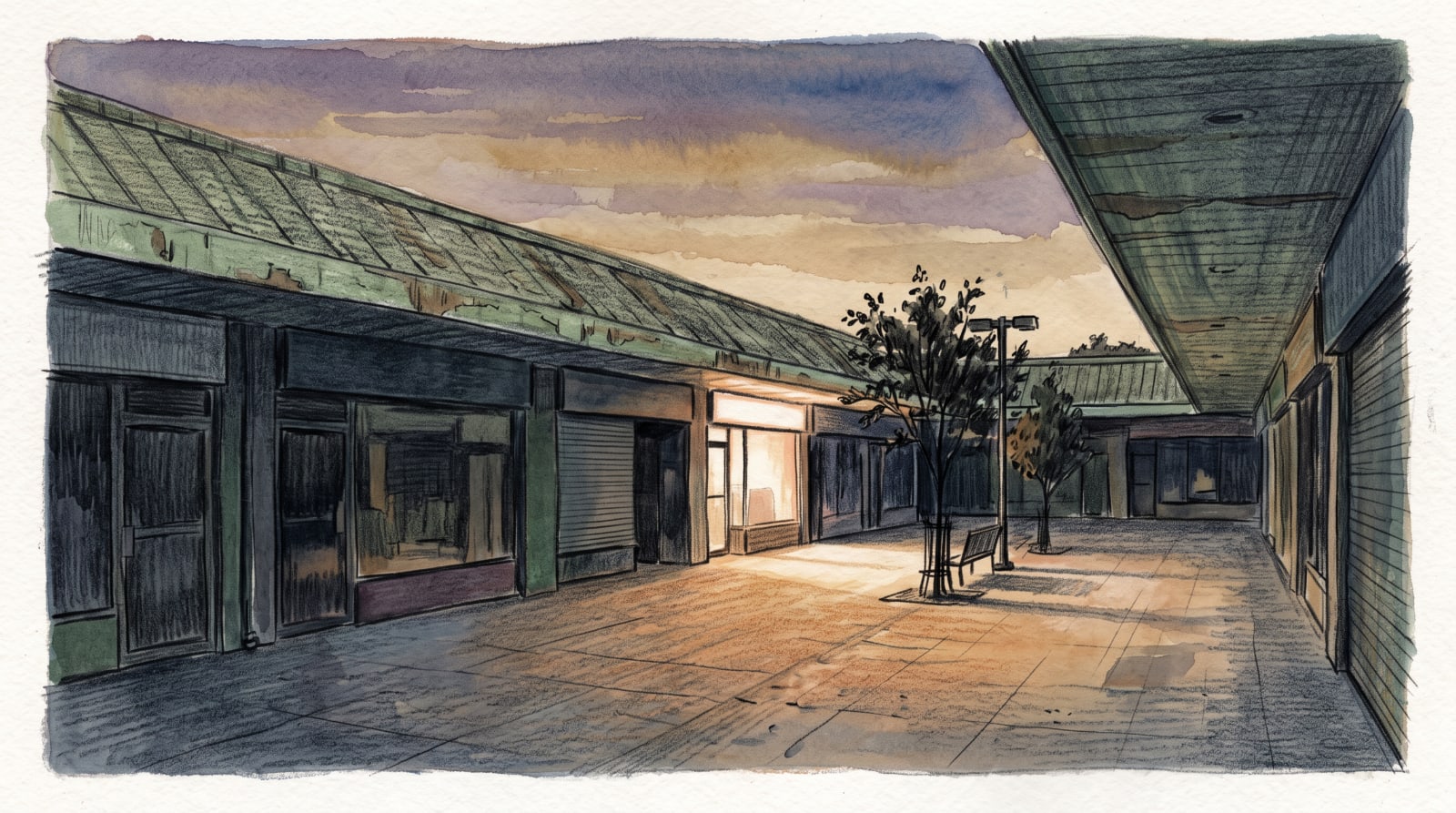
In 2018, I had some money and thought, I should invest this. I found a small plaza in another city and bought it for about a million dollars. The math seemed simple: if I rented it out for ten years, I would get the money back. I didn’t think too much beyond that. Then the fundamental problems appeared—the foundation, the roof, things that needed money straight out of my pocket. The pandemic made everything worse. One of the two restaurants kept paying, though with reduced rent. The other closed. I had a well-paying job at the time, so I used my own money to keep paying the loan. I tried to sell in 2022 or 2023. When I counted everything—the repairs, the money I put in, the income, and the sale—I was down somewhere around twenty to thirty thousand dollars. That was the direct loss. There was also the indirect loss: I had sold a lot of company stock to keep the property going, and that stock rose afterward. That part still stings. People can call it a win because I didn’t lose more. I can call it that too. But it was still torturing. My takeaway is that I don’t want to touch property again. It isn’t liquid, and you can’t always turn it into cash when you need to. When this week’s topic came up, I immediately remembered that plaza—and the feeling of having given so much just to get out.

An Ember · 4d ago